Astrophotography, 29th November, Richard Jakobson

Tonight we enjoyed a fascinating talk on Astrophotography given by one of our long-standing members, Richard Jakobson. His talk was divided into two halves, in the first he concentrated on the Milky Way describing it as a pizza with a large egg in its centre. Richard goes to great lengths to achieve his shots, camping out all night in some cases. The effort he puts in was more than evident in the many superb images he used to illustrate his talk. Most of these were taken in the Lake District. Castlerigg, Crummock Water, Wast Water and Buttermere being some of his favourite locations.
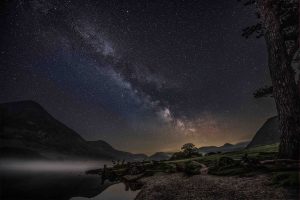
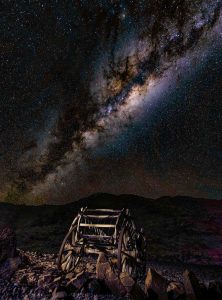
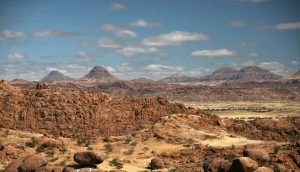
Images were shown from further afield too, including Stonehenge in Wiltshire, Portugal and Deadvlei in Namibia.
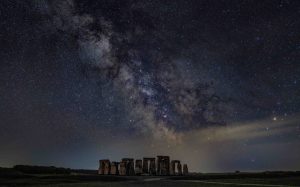
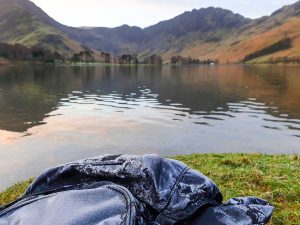
Richard explained that, although he has been taking images of the Milky Way for some years, the occasions on which he can pursue this interest are limited. The weather conditions have to be perfect with clear skies, the moon has to be in the right phase and the Milky Way has to be in a good position. Here in the North its location is best in the spring. Whatever the time of year though you need to be adequately prepared for the cold with warm clothes, hat and gloves. Richard emphasised this necessity with an image of ice that had formed on his rucksack while he was taking photographs.
He recommended surveying potential locations during daylight hours, not only to identify good compositions but also to be aware of hazards such as rocks, rabbit holes and barbed wire. In Namibia there was also the possibility of encountering wild animals including lions. Fortunately, his only encounter had been with a Bat Eared Fox.
Richard also showed some images of the moon and the Aurora Borealis and gave some tips on photographing these too.
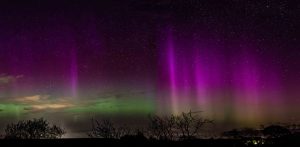
The second half of Richard’s talk was dedicated to Deep Sky Astrophotography. This requires rather more specialist equipment than for photographing the Milky Way. The resulting images of a number of nebulas taken by Richard were however spectacular.
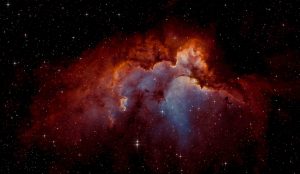
Surprisingly, despite their huge distance from the Earth, because they are so enormous some can even be seen through binoculars.
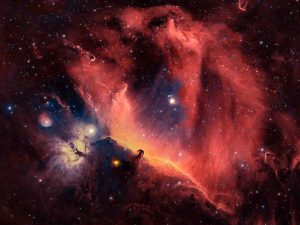
He explained that this type of photography is not for everyone. Considerable patience is required as 30 to 40 images are needed to build up a picture, each exposure taking 4 to 5 minutes. A fondness for spending hours in front of a computer screen processing the images is also helpful.

Julie Walker
“Africa’s  Savannah, Desert and Bush” with Alan Walker, November 22nd, 2023

Alan Walker, our speaker this week, is a long-standing member of Keswick Photographic Society who needed no introduction. He has many photographic interests but he is probably most passionate about wildlife and has travelled far and wide in pursuit of his favourite species. Tonight, he concentrated on Africa and his entertaining and informative talk, titled  “Africa’s  Savannah, Desert and Bush”,  included images from Namibia, Botswana, South Africa and Kenya.

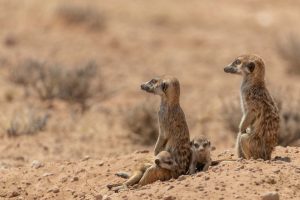
He started his talk in the Namib Desert in Namibia and moved swiftly to the Kalahari Desert which spans three countries. Alan emphasised the quality of light and his love of the yellow grasses in the Kgalagadi Transfrontier Park in South Africa. His images included some of the smaller animals such as mongoose and meerkats:

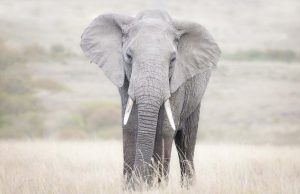
although to his disappointment none were wearing stripy pyjamas or smoking jackets!  Of course, many of the larger animals were also pictured including several species of antelope, gemsbok, lions, cheetahs and desert elephants.

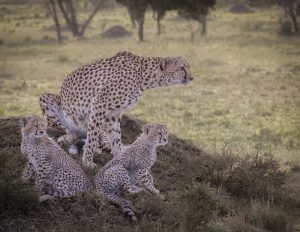
Cheetahs are amongst Alan’s favourite animals. On a trip to the Masai Mara in Kenya in October this year Alan had encountered two females, one with three cubs which were only a couple of months old and a second with two slightly older cubs.

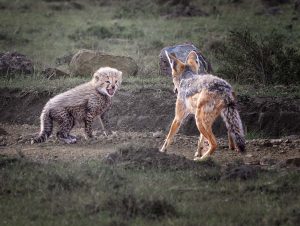
These were very rare and precious sightings. Cheetahs are an endangered species and Alan described how vulnerable they are, although feisty which was demonstrated by even the youngest cubs challenging the jackals that frequently followed them around.

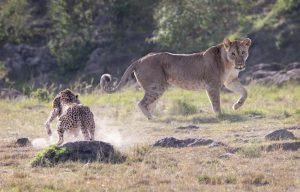
Lions and hyenas however present the greatest danger and Alan described a confrontation between lions and one of the cheetah families during which the local rangers, together with the several guides that were present, successfully protected the cheetahs by manoeuvring their vehicles to create a barrier between the two species.

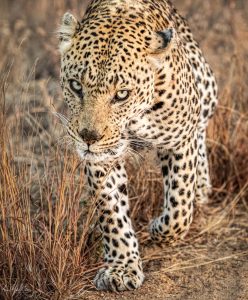
There were also numerous images of lions and their cubs which Alan said provided entertainment for hours with their antics. Leopards were also included, together with elephants, baboons and many species of antelope.

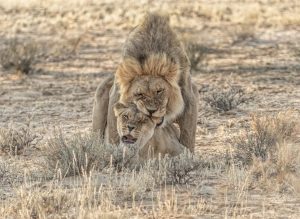
The final section of Alan’s talk focused on the bush of the Kruger National Park in South Africa where it was more difficult to see and follow the animals. He included a story about a pair of mating lions who he’d been able to follow because of his driver’s ability to reverse for several miles along a rough track.

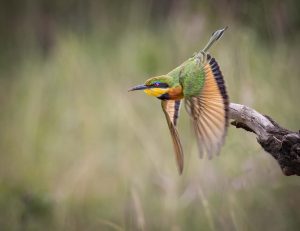
He also talked about the white rhinos that are protected by rangers from the poachers who cross the border from Mozambique. Indeed this is a highly dangerous occupation. Alan concluded his talk with a selection of images of birds.

Julie Walker

Editors addendum: It is important to note that although Alan presented this wonderful collection of wildlife images and Julie wrote the above article, she omitted to mention that the presentation  was a collection of both Alan’s and her own images.