Edinburgh International Print Exhibition, 2023

The Edinburgh International Print Exhibition is an extremely prestigious competition founded in 1861. It is judged prior to the Edinburgh Festival and the winning images exhibited during the Festival.

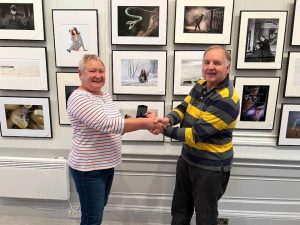
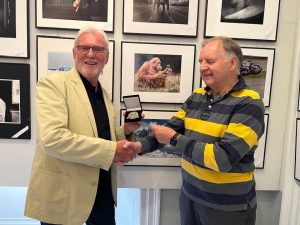
The percentage of submitted images which are accepted for the exhibition is vanishingly small. It is indeed remarkable and possibly unique that our wife and husband team, Julie and Alan Walker each achieved a Gold Medal in the exhibition this year.

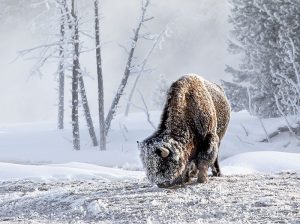
Julie for ‘Bison Foraging in the Snow’ which won the PSA Gold Medal

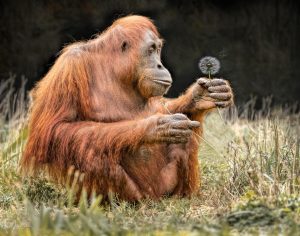
and Alan for ‘He loves me, He loves me not’ which won the GPU Gold Medal

Many, many congratulations to both who are seen below receiving their medals from the chair of the exhibition


NCPF Annual Results 2023

This is the first of a series of posts celebrating our club and members’ successes in various national and international competitions over the past 12 months. The Nothern Counties Photographic Federation Annual Competition is the main competitive event organised by the Federation for clubs across the North East of England and Cumbria. Twenty nine clubs entered the 2023 Annual Competition. Keswick PS and its members were successful in a number of the categories:

We won the Corder Trophy for the best club entry of Monochrome Prints.            We were second in the Bewick Trophy for the best club entry of Colour Prints.   We won the Myles Audas Memorial Trophy for the best club entry of Projected Digital Images.

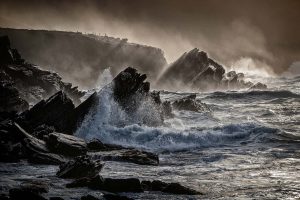
Individual awards for members were ‘Storm Over The Mountain Cabins’ by Alan Walker which won overall best photograph in all sections and best colour print:

‘Bison Foraging In The Snow’ by Julie Walker which won Best Nature Print


‘Taking in the Sea Air’ by Julie Walker which won Best Creative Print


‘Disapproval’ by Alan Walker which won Best Human Portrait Mono Print


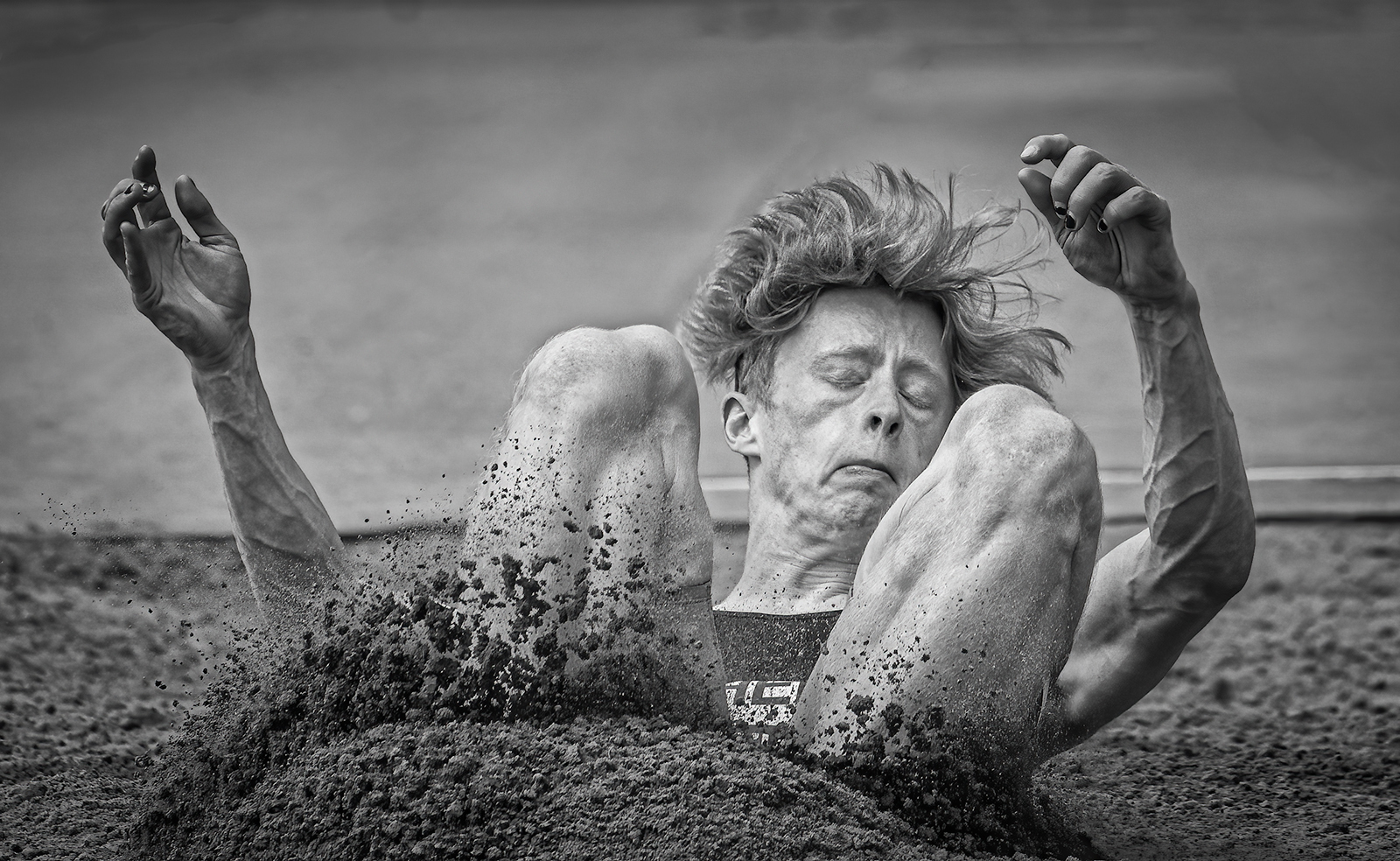
‘Beaten’ by Bob Given which was the Best Sport PDI Image


and ‘The Modest Smile’ by Alan Walker which was the Best Human Portrait


Portfolio of the Year, DPI’s, March 29th, 2023

This week’s meeting of the photographic society was part one of the Portfolio of the Year competition.  This year, because of the large number of submissions, the judging will be  taking place over two meetings with the first being the judging of projected digital images (PDIs) and the second meeting, on 12th April, for prints.

Our judge this week was Dave Best LRPS a long-standing committee member of Hexham and District Photographic Society and a judge of some experience.  He acknowledged that the collection of 72 images were of a high standard and as the evening unfolded those present would concur with that.

The Portfolio of the Year competition allows competitors to submit up to four PDIs but with a restriction that each image must be of a different genre.  The genres include for example, Nature, Creative, Landscape, Mono, Portrait, Sport, Photo-journalism etc.  This is challenging for our members, several of whom specialise in perhaps one or two genres. It is quite revealing to discover that accomplished Nature or Landscape photographers are often very good in other fields of photography.

The winner of the competition, which is determined by the combined score of all the entries, was Alan Walker whose submission included a portrait of a ‘down and out’ sitting against a graffitied wall in Belfast (who was actually a very good actor/photographer/model and a member of our club!).  It was called Just a Statistic. Other images of Fighting Sea Eagles, a dramatic landscape entitled Storm over the Dolomites and a top scoring sport image of a head-on shot of a long jumper completed the winning submission.


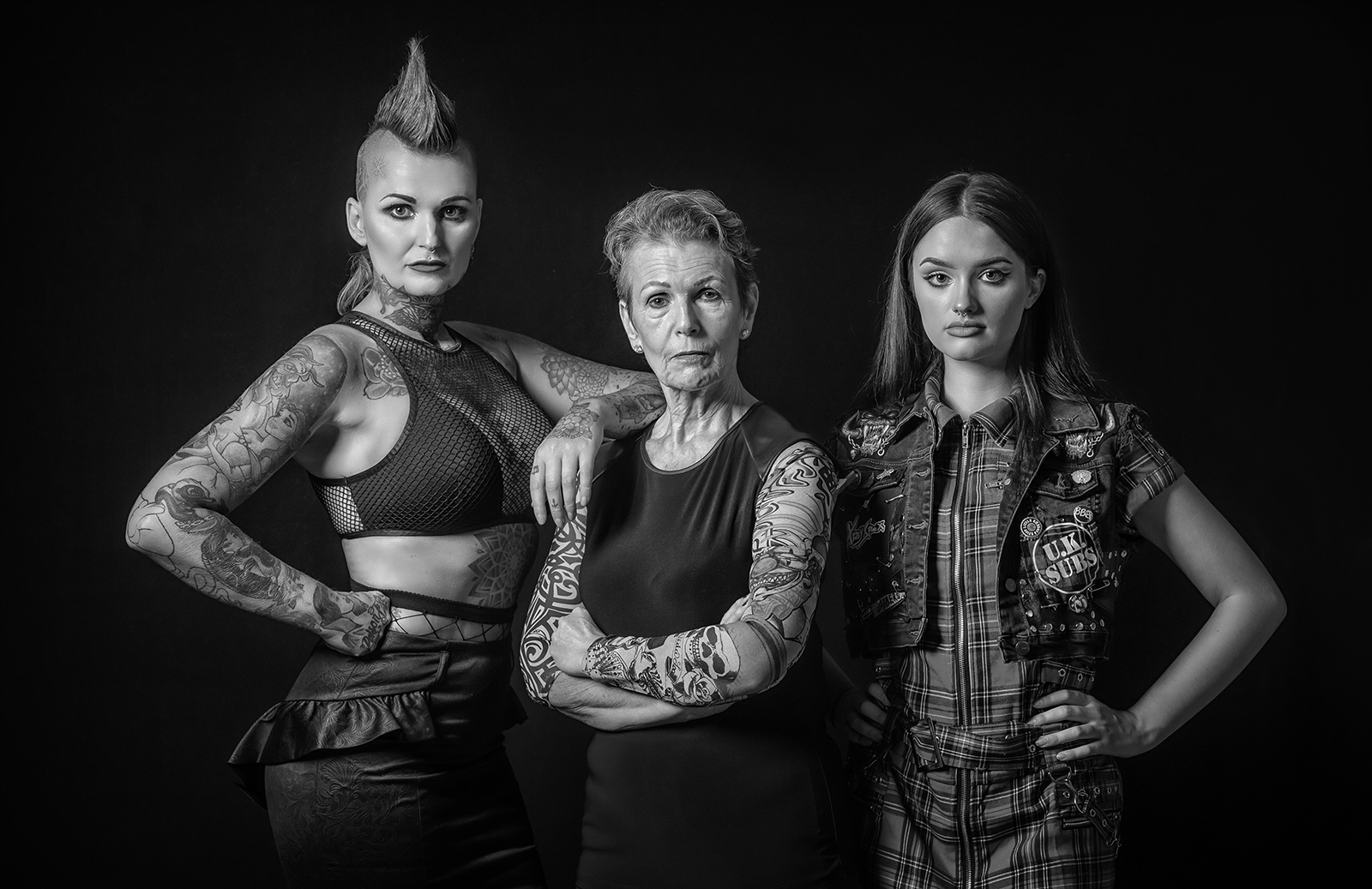
The ‘down and out’ was actually Bob Given, who was second equal in the competition with Ade Gidney. Bob’s monochrome and quite dramatic image of three women posing as ‘The Management’ was the overall best image of the night.


Ade Gidney’s images included a beautiful view of mist over White Moss


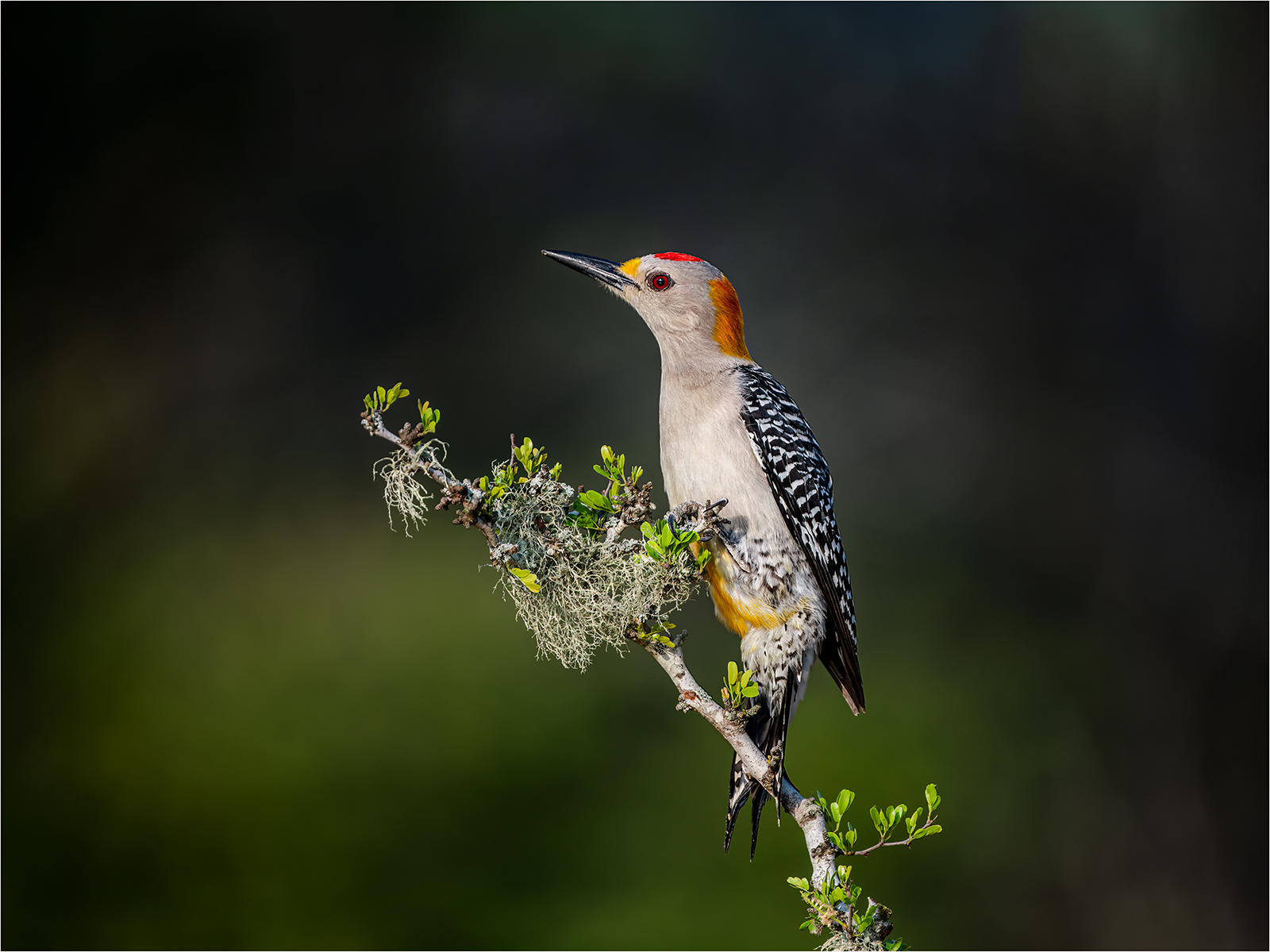
The best natural history image was a superb pin-sharp and very colourful portrait of a Golden-fronted Woodpecker by Ronnie Gilbert.


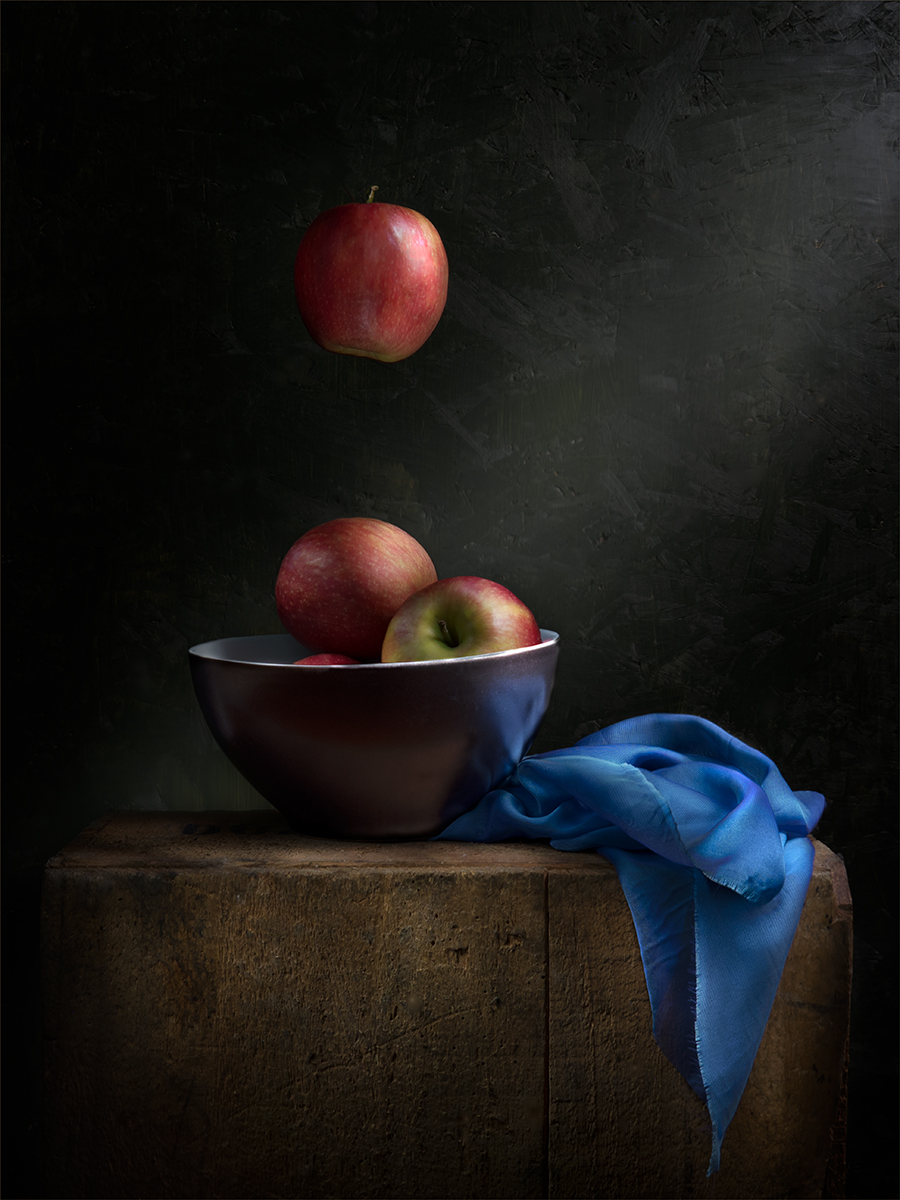
Jo Knight, who specialises in very artistic and creative images submitted the winning Still Life image called Gravity.  It was of a bowl of apples with an apple in mid-air, apparently falling into it.


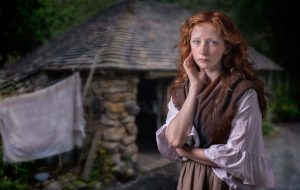
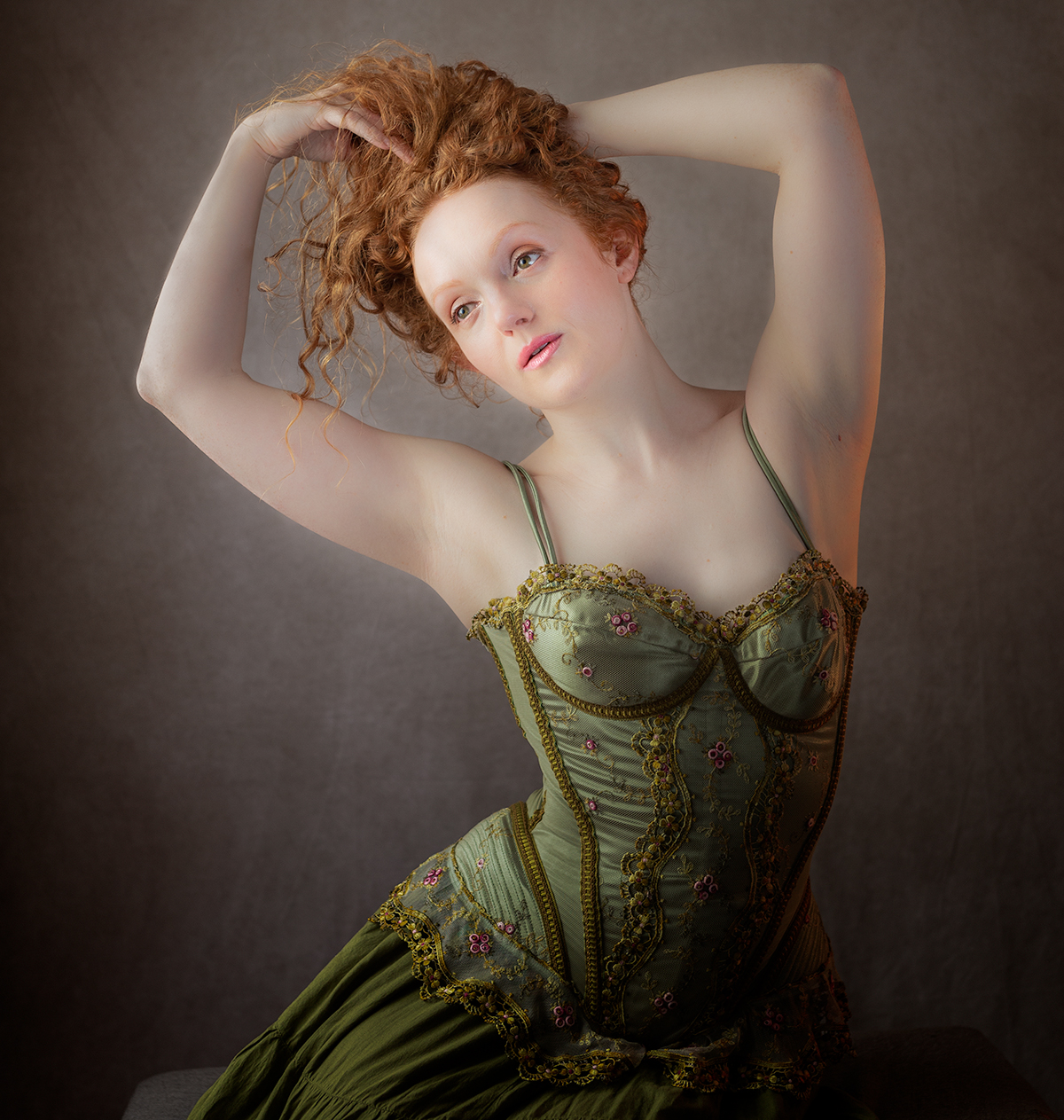
Julie Walker’s studio portrait, Holly in Green was of a well known red haired model wearing a very ornate green dress. The very detailed image with perfectly captured and portrayed skin tones won the best Portrait of the competition.


David Woodthorpe

Tim Pile, 22nd March 2023

On Wednesday 22nd March we had a wonderful presentation given by award winning photographer Tim Pile. Tim is a member of Smethwick Photographic Society. His specialism is in fine art images of women taken in the open air. His aim in his own words is to “capture the beauty of the female form in the manmade and natural environment”. A unique characteristic of his work is that his model usually only occupies a very small part of the overall image thus emphasising the grandeur of the backdrop.


Tim started the evening by talking about his photographic journey which began in 2008. He said that at that point in his life he was too shy to take photographs of people. However, this changed as his confidence grew as his photography developed. In the early days he experimented with different types of photography including infrared. He quickly moved on to taking portraits of women and developed his own style through contrasting the curves of the female body with the geometrical lines of the manmade world.


In pursuit of this Tim has taken images in some seemingly unpromising places. These include derelict buildings, empty office blocks, a derelict railway station, a disused swimming pool, an old nightclub, and an abandoned hydro-electric power station. He very rarely takes studio images and even then he prefers to use natural light.


The second half of Tim’s talk was dedicated to his collaboration with a particular model whom he met in 2014. Their partnership has led him to photograph outdoors in many different locations both in the UK and abroad. Their travels have taken them to Scotland, Ireland, Portugal, Norway, Iceland, Italy, Corsica and France amongst others. Some of his favourite settings include moss covered rocks, coastal scenery, woodlands, volcanic lava fields and waterfalls. He carries out extensive research before settling on a particular location and most shoots involve a very early morning start. His priority is always for the wellbeing and safety of the model. In cold locations his model is only required to pose for a few minutes before warming up.


A particular aspect of Tim’s photography is the unusual angles that he sometimes photographs from. Many of his most striking images are taken from above. He experimented with different angles from the outset of his photographic journey. Attention to detail is also paramount and he will often spend half an hour or more setting up a shot before taking a single image.


Tim illustrated his talk with a huge number of superb prints including those that made up his successful Royal Photographic Society Associate and Irish Photographic Federation Fellowship panels. It was a master class in fine art photography and a fascinating and most enjoyable evening.

Julie Walker
Michael Berkeley, 15th March 2023

Keswick Photography Society were entertained and educated in equal measure by a presentation from Sports and Music photographer Michael Berkeley, delivered via Zoom from his home in Wiltshire. Michael is highly experienced, having photographed more than three hundred musical acts and over four hundred sporting events, covering thirty different sports. Although sports and music might seem to be entirely different, he outlined the similarities of having an unpredictable moving subject, (especially at the more lively rock gigs), with lighting conditions outside the photographer’s control and usually very low in indoor events, and variable weather, sometimes cold and wet, sometimes hot and steamy.


The challenge is then to capture the decisive moment; the football bulging the net, the cricket ball and bails still in the air or the guitarist in mid leap, to isolate the point of interest by choosing to shoot from a position with as uncluttered background as possible and, hopefully, to tell a story. A striker wheeling away in triumph followed by his joyful teammates, perhaps with one or two despondent defenders in the frame is likely to be more powerful than an image showing him actually kicking the ball when scoring.


Key tips in sport included getting down low which increases the sensation of being in the middle of the drama, although an exception might be that in cricket a higher position can allow for the cleaner background of the grassy outfield as opposed to the sparsely occupied seating in the stands. It is important to be highly familiar with the camera and its functions so that changes to settings can be made rapidly and without missing the action, but not to be obsessed with technical perfection as a slightly out of focus shot that dramatically tells the story will be better than a perfectly sharp one that does not.


Generally, Michael shoots with a narrow depth of field, as this helps blur distracting backgrounds and he will take lots of images, rejecting up to 95% in order to get the ones that are most successful. Digital cameras with high-speed motor drives make this straightforward, but in musical settings, especially in quiet classical pieces, having a silent mode on the camera is also essential. Michael uses Sony mirrorless cameras that can be set to make no noise at all when shooting.


All of this advice was accompanied by numerous images of football, cricket, basketball, motor racing, speedway, rock bands both in dark sweaty venues and at a festival in the open air and concerts given by the Salisbury Cathedral School pupils, some in the Cathedral itself. Refreshingly, he showed a number of images that he did not feel had really “worked”, and explained in each case why and what could be done differently. An example was of photographing Speedway, a high-speed sport if ever there was one, where too high a shutter speed resulted in sharp spokes on the wheels which resulted in looking rather static and failed to convey the same feeling of speed that blurred ones would. Another was the simple trick of strange colour casts caused by the lights in an indoor music event being negated by the simple expedient of converting the image to black and white.


All in all, a highly informative evening.

Tony Marsh

David Poole, 1st March 2023

Our speaker on 1st March was David Poole from Milnthorpe in the South Lakes. David is a dedicated and enthusiastic wildlife photographer. His talk was titled “The Wildlife of Morecambe Bay” and he took us on a grand tour of the nature reserves surrounding the bay of which there are more than thirty.

David started in the north at Hay Bridge where, amongst others, there are Ospreys, Adders, deer and dragonflies. From there he took us to Witherslack for butterflies. His next stop was Foulshaw Moss where he has been photographing wildlife for more than twelve years. He said that this reserve is particularly good for butterflies, dragon flies, moths, beetles and damsel flies and many other species of wildlife.

He arrives there early in the morning to have the best chance of finding, and photographing, his subjects. He then took us to the Lythe Valley where there is a site that is known for its Fritillary Butterflies including the rare High Brown which is Britain’s most threatened butterfly. Next came images of the Beautiful Demoiselle, a species which can be found on the river Gilpin. Then on to Hawfinches which he had photographed at Sizergh Castle where they are attracted to the Hornbeam trees. He then showed some photographs of Dippers taken on the River Kent. These included some of a Dipper feeding its chick.


David has his own hide and from this he has photographed a huge range of birds. He uses a mirrorless camera as this makes no sound and thus does not scare the more nervous birds, such as Buzzards, away.


After the break David took us to Arnside Knott and then on to Leighton Moss. He has been visiting the latter at least once a week for many years and in 2008 he produced a book “A Year at Leighton Moss”. As well as photographing numerous species of birds here he has also photographed Otters and Red Deer. From here he took us further south to the Great Barrows Nature Reserve at Arnside, the River Keer at Carnforth and the Middleton Nature Reserve at Heysham.


David’s beautiful photographs of a huge number of species were interspersed with numerous amusing anecdotes relating to his experiences whilst out taking photographs. We also learned about the behaviour of the various species he photographed. Altogether it was a wonderful evening.

Julie Walker
Ken Rennie, 15th February 2023

15th February saw Keswick Photographic Society welcome back specialist landscape photographer Ken Rennie with his presentation entitled “Finding Beauty in Nature”. Ken had been an important member of the society up until last year, but living near Brampton made attending our meetings an increasing challenge. He has had work accepted in a number of prestigious exhibitions including Landscape Photographer of the Year and Edinburgh Festival Exhibition and has been published in Landscape Photography Magazines and in the past contributed significantly to Keswick’s success in both international and national photographic competitions.


Ken described the main categories of photographs that he has pursued over the years commencing with “Grand Landscapes” heavily featuring the Scottish hills as well as Cumbrian fells and valleys but also some epic areas on the Continent, some of which he travelled through on his bike. His is keen to revisit favourite spots and showed us different pictures of the same vista taken over a number of years as he searched for the perfect combination of light and weather conditions. He warned against being seduced by a pretty view and not taking into account the subtleties of maximising the most satisfying composition with the important elements sitting in a pleasing position. Not averse to removing distracting elements or adding in others at the processing stage, even if it is only lightening appropriate patches to simulate sunlight, he is not out to achieve total realism but create something believable, which shows what attracted him to take the photograph in the first place and which hopefully creates an emotional response. He will always ask himself at the time if he has made the very best of the location and the conditions that he could.


Such perseverance and attention to detail was also evident in his pictures of the next section of the talk concentrating on “Waterfalls”, both in the large scale and in small details. He is a master of slow shutter techniques, but will often blend three or more images to have elements of sharp stationary foliage together with blurred milky water, and/or detail in both a bright sky and in dark rocks in the combined result. He is very skilled at this and other processing manipulations but stresses the importance of processing manipulations not being evident to the final viewer. A section of “Monochrome”, (black and white), images included a number of waterfall shots, especially those focussing tightly on small cascades and the swirling effects of foam on the “splash pools” under the waterfalls, that appear with a long  exposures. Many of these require delicate positioning of both himself and tripod over some wet and mossy areas and Ken stressed the importance of being on the right side of precariousness when manoeuvring.


Other favourite subjects for monochrome included winter trees with those combined with snow and perhaps a stark fence being especially successful.


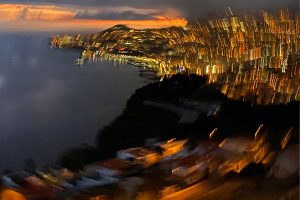
“Nature” subjects were not neglected with some exquisite flower and insect macro-photography and a few “People shots”, most memorably of a prettily dressed tourist standing in a lavender field in Provence which he made especially timeless by digitally removing the rather annoying arm and hand holding her mobile phone! A more recent project has been a concentration on “Seascapes” often combined with “Intentional Camera Movement” where the camera is moved slightly during a slow shutter opening in order to deliberately capture a pleasing and atmospheric blur.


It was a real pleasure to see both Ken and his work again, many of them images we have been familiar with over the years, but with plenty we had not seen before. Although he delivered his talk with projected images, he brought along a number of his exquisite and highly accomplished prints for us to view at the tea-break and after the talk itself.

Tony Marsh

Rod Wheelans, 25th January 2023

Rod Wheelans from Dumfries presented what he referred to as his “holiday snaps” to the meeting. These were not just any snaps though as many were award winning prints. He also showed photographs taken by his wife Anne Greiner, who is also an award-winning photographer. Rod is well-known in the photographic world and he is a past president of the Photographic Alliance of Great Britain.

Rod explained that their main interest was in travel photography and in particular photographing people. He and Anne had visited both Georgia and Turkey many times and he kicked the evening off with a selection of photographs taken in Turkey. He said that he always ensured that the guides he employed took them to remote villages in the mountains where residents of the lowlands traditionally took their animals to graze during the summer months. Many continue to spend their summers in their temporary dwellings in the mountains, which are little more than huts, although they no longer have any livestock.

Rod and Anne had photographed some of the villagers over several years and Rod recounted many amusing tales about their encounters. Most were more than willing to have their photographs taken and some were even prepared to queue. Rod always made a point of taking their photographs back with him on subsequent visits as gifts. He has even learned a little Turkish so that he can communicate with the local people.


Rod then moved on to his photographs in Georgia where his experiences were similar to those in Turkey. In both locations many of the photographs were taken in people’s homes. In Georgia he described how the Russians had taken everything with them when they left except for a large number of yellow buses. The local people had now put these to good use, in some cases converting them in to homes for themselves and in others turning them in to shelters for their animals.


During the interval Rod displayed his successful Royal Photographic Society Fellowship Panel comprising 21 monochrome prints of images taken in Georgia.  In the second half of the evening Rod showed us images of people taken on a recent trip to Brazil and then went on to show us other work including images of dancers, portraits and domestic animals.


Rod is a very entertaining speaker as well as an excellent photographer and we had a most enjoyable evening.

Julie Walker
Jennifer Willis, 18th January, 2023

This week’s talk titled “When Life Gives You Lemons” was given by Jennifer Willis from Northern Ireland. Jennifer describes herself as a wife, mother of three adult boys, grandmother, dog lover and photographer. In fact, she is a multi-award-winning photographer.


During the first half of the evening Jennifer talked about her early work. This included studio portraits, sports photography, especially rugby, and photographing dogs and other animals.


She showed us numerous examples of her work. More recently Jennifer started working with friends rather than professional models and she says that this is where she gains most satisfaction.


The second half of her talk was devoted to a special project that she has undertaken in the last 18 months or so. This involved taking photographs of women with secondary breast cancer. She describes these photographs as the most important she will ever take.


She has exhibited 32 of these images in Northern Ireland and is proud to have raised awareness of the issues facing these women. It was a most poignant and thought-provoking evening.

Julie Walker
Dumfries Camera Club, January 4th 2023

For the first meeting of the new year Keswick photographic Society (KPS) members were entertained by four members of Dumfries Camera Club. This is a reciprocal arrangement; four members of KPS having presented talks to Dumfries a few weeks earlier. It was a tremendously successful evening with members treated to some first class images and explanations of techniques.

The evening began with Margaret Elliott explaining how a Covid 19 lockdown project resulted in the production of a panel of fine art macro images of flowers which gained her the qualification, Associate of The Royal Photographic Society.  She explained the processes involved, occasionally freezing the flower heads in water and the practice of photo-stacking.
 

This involved her photographing very tiny parts of a flower and continually adjusting the point of focus before taking more, thereby ensuring that the resulting image is pin-sharp throughout the depth of the image. Margaret superimposed layers of texture on some of the images to great effect.


David Moyes explained his journey through architectural photography from absolute novice through to expert with success at the highest level.  Last year David won a Gold Medal at the prestigious Edinburgh Exhibition and had a number accepted in international salons.  David explained that the principal lesson in his success involved the understanding of the impact of light and shadow.

Showing his original images, followed by the monochrome processed images, David revealed just how dramatically different the results could be, even when beginning with apparently simple colour photographs.  He also demonstrated how the treatment worked so much better with new materials and shapes in modern architecture.


Maybeth Jamieson began her presentation with images from her photography passion; sport and particularly, tennis. Her images captured the raw emotion and the extreme exertion of professional tennis players. Maybeth demonstrated the techniques which best delivered the drama of the game emphasising in the shape of the players, the light and shadows and the opportunities to include or exclude the contextual environment elements.


In addition to tennis Maybeth enjoys equestrian sports from point to point to three day eventing and visits many locations around the Borders capturing the action very successfully. The talk was rounded off with a variety of other sporting images including cricket, athletics and motorbike scrambling.


Jean Robson completed the line-up and showed some remarkable images from her two recent trips to Svalbard.  Entitled Arctic Moods, Jean’s talk began with an explanation of her expectations; to photograph arctic wildlife.  Her successes, however, were initially with wonderful landscapes.


Arriving in late April the sea ice was melting and the pancake ice seascapes were enhanced by the incredible patterns created by the ice and the directional lighting.  Occasionally wildlife would enter these landscape shots and produce even more wondrous images.  Two such images included a fox and a walrus making unannounced appearances!  Jean explained the lack of interest shown by the wildlife in general to the zodiacs in which they approached some.  This enabled some wonderful close-up photographs of Walrus, Seals, Reindeer and, on her later autumn trip, Polar Bears waiting for the arrival of the winter ice.


The later trip also provided beautiful lighting conditions on mountain sides swept clear of snow. Jean captured many stunning images of wildlife and landscape.

It was a thoroughly enjoyable evening for which all four speakers were thanked and applauded.

David Woodthorpe