Astrophotography, 29th November, Richard Jakobson

Tonight we enjoyed a fascinating talk on Astrophotography given by one of our long-standing members, Richard Jakobson. His talk was divided into two halves, in the first he concentrated on the Milky Way describing it as a pizza with a large egg in its centre. Richard goes to great lengths to achieve his shots, camping out all night in some cases. The effort he puts in was more than evident in the many superb images he used to illustrate his talk. Most of these were taken in the Lake District. Castlerigg, Crummock Water, Wast Water and Buttermere being some of his favourite locations.
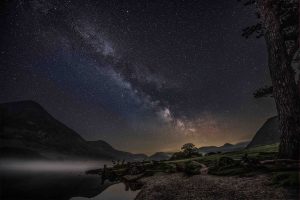
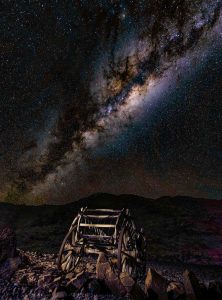
Images were shown from further afield too, including Stonehenge in Wiltshire, Portugal and Deadvlei in Namibia.
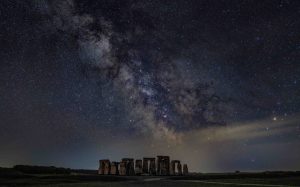
Richard explained that, although he has been taking images of the Milky Way for some years, the occasions on which he can pursue this interest are limited. The weather conditions have to be perfect with clear skies, the moon has to be in the right phase and the Milky Way has to be in a good position. Here in the North its location is best in the spring. Whatever the time of year though you need to be adequately prepared for the cold with warm clothes, hat and gloves. Richard emphasised this necessity with an image of ice that had formed on his rucksack while he was taking photographs.
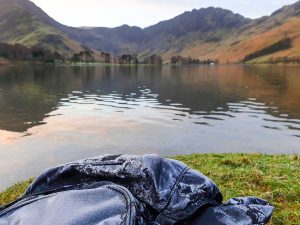
He recommended surveying potential locations during daylight hours, not only to identify good compositions but also to be aware of hazards such as rocks, rabbit holes and barbed wire. In Namibia there was also the possibility of encountering wild animals including lions. Fortunately, his only encounter had been with a Bat Eared Fox.
Richard also showed some images of the moon and the Aurora Borealis and gave some tips on photographing these too.
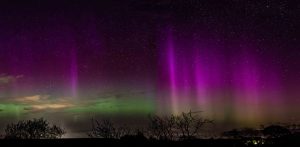
The second half of Richard’s talk was dedicated to Deep Sky Astrophotography. This requires rather more specialist equipment than for photographing the Milky Way. The resulting images of a number of nebulas taken by Richard were however spectacular.
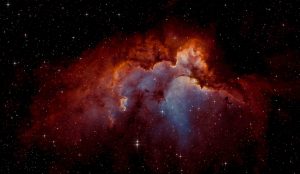
Surprisingly, despite their huge distance from the Earth, because they are so enormous some can even be seen through binoculars.
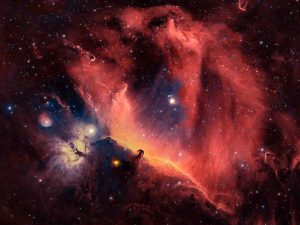
He explained that this type of photography is not for everyone. Considerable patience is required as 30 to 40 images are needed to build up a picture, each exposure taking 4 to 5 minutes. A fondness for spending hours in front of a computer screen processing the images is also helpful.

Julie Walker
“Africa’s  Savannah, Desert and Bush” with Alan Walker, November 22nd, 2023

Alan Walker, our speaker this week, is a long-standing member of Keswick Photographic Society who needed no introduction. He has many photographic interests but he is probably most passionate about wildlife and has travelled far and wide in pursuit of his favourite species. Tonight, he concentrated on Africa and his entertaining and informative talk, titled  “Africa’s  Savannah, Desert and Bush”,  included images from Namibia, Botswana, South Africa and Kenya.

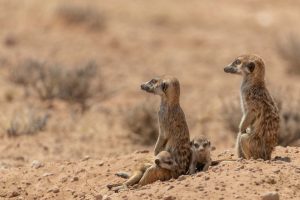
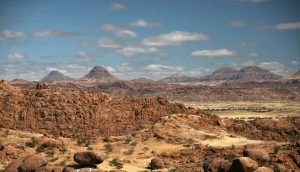
He started his talk in the Namib Desert in Namibia and moved swiftly to the Kalahari Desert which spans three countries. Alan emphasised the quality of light and his love of the yellow grasses in the Kgalagadi Transfrontier Park in South Africa. His images included some of the smaller animals such as mongoose and meerkats:

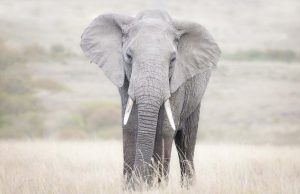
although to his disappointment none were wearing stripy pyjamas or smoking jackets!  Of course, many of the larger animals were also pictured including several species of antelope, gemsbok, lions, cheetahs and desert elephants.

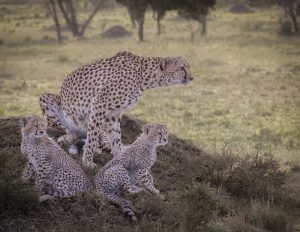
Cheetahs are amongst Alan’s favourite animals. On a trip to the Masai Mara in Kenya in October this year Alan had encountered two females, one with three cubs which were only a couple of months old and a second with two slightly older cubs.

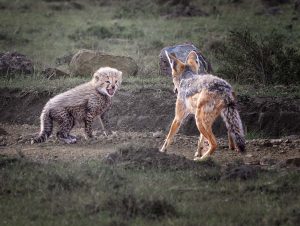
These were very rare and precious sightings. Cheetahs are an endangered species and Alan described how vulnerable they are, although feisty which was demonstrated by even the youngest cubs challenging the jackals that frequently followed them around.

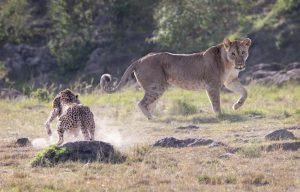
Lions and hyenas however present the greatest danger and Alan described a confrontation between lions and one of the cheetah families during which the local rangers, together with the several guides that were present, successfully protected the cheetahs by manoeuvring their vehicles to create a barrier between the two species.

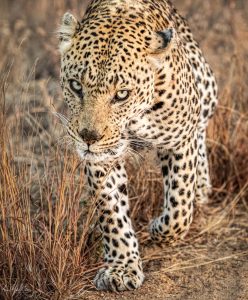
There were also numerous images of lions and their cubs which Alan said provided entertainment for hours with their antics. Leopards were also included, together with elephants, baboons and many species of antelope.

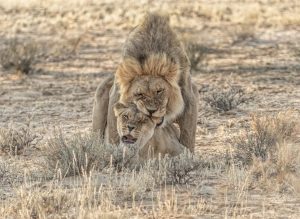
The final section of Alan’s talk focused on the bush of the Kruger National Park in South Africa where it was more difficult to see and follow the animals. He included a story about a pair of mating lions who he’d been able to follow because of his driver’s ability to reverse for several miles along a rough track.

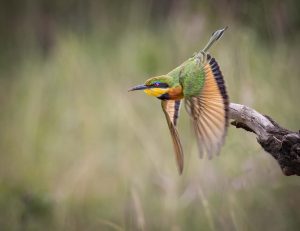
He also talked about the white rhinos that are protected by rangers from the poachers who cross the border from Mozambique. Indeed this is a highly dangerous occupation. Alan concluded his talk with a selection of images of birds.

Julie Walker

Editors addendum: It is important to note that although Alan presented this wonderful collection of wildlife images and Julie wrote the above article, she omitted to mention that the presentation  was a collection of both Alan’s and her own images.

Simon Roberts’ Success

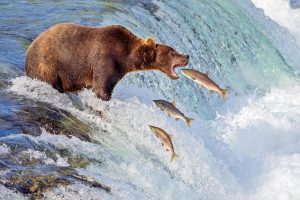
I am pleased to report that one of our members, Simon Roberts has been very successful in this years BBC Wildlife Magazine, Wildlife Photography Awards. His image of an Alaskan bear fishing, not only won the Behaviour category, but was also judged as the overall winner.

Congratulations to Simon.

Short Sets Competition: “After Dark”, Nov 15th 2023

This autumn’s short sets competition was chosen and judged by David Woodthorpe. His choice of topic was “After Dark”. This resulted in both a wide genres of images including landscapes,  portraits, wildlife, architecture and composites, and a large number of images, 60 in total.

As usual David gave constructive criticism laced with humour but successfully managed to gently rattle the cages of some  of our senior, experienced members! At the end of the evening he declared his “best of” in various categories:

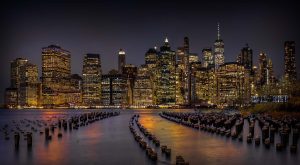
Best Landscape was “Wallstreet After Dark” by Alan Walker:

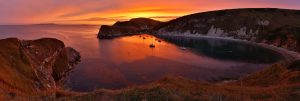
Best Seascape was “Lulworth Cove” by Tom Stenhouse:

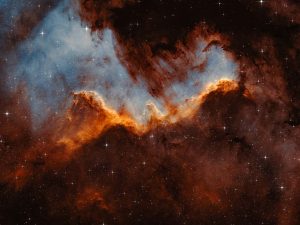
Best Skyscape was “The Cygnus Wall” by Richard Jakobson:

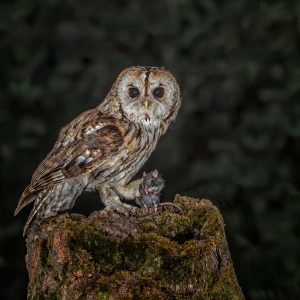
Best Wildlife was “Tawny Owl Hunting at Dusk” by Alan Walker:

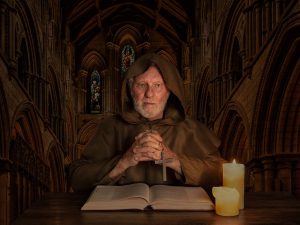
Best Portrait and David’s choice of Best of the Evening was “Evening Prayer” by Jo Knight:

All of the entered images can be viewed on our gallery pages for 2023-2024

Scottish Wildlife with Mick Durham, November 8th, 2023

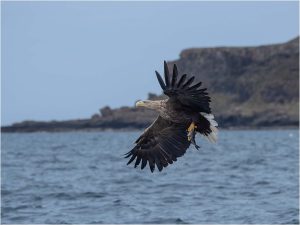
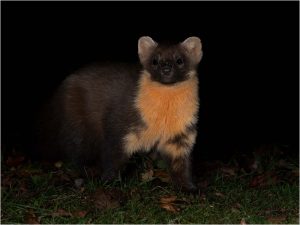
Mick Durham is uniquely qualified to deliver an evening on “A Guide to Scottish Wildlife” as not only a Fellow of the Royal Photographic Society, but the current chair of its natural history distinctions panel. He also works providing professionally guided trips to observe & photograph Scottish wildlife with “Shetland Nature” and has a background in teaching & outdoor activities. It’s an impressive combination & we weren’t disappointed.

We are used to visitors envious of where we live, but Mick showed a collection of what can be found in nature not very far away if you know where to look. He did have gremlins to defeat in travelling down from Dumfries through “Cumbrian” weather and unusual traffic chaos, before seeing off his computer’s challenges.

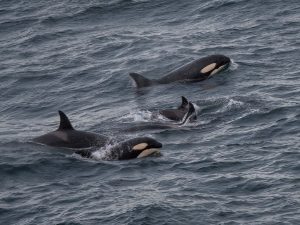
Rather than a technical lecture, the presentation was primarily an engaging travelogue of trips he has led within the last couple of years to Mull and to Shetland in which he shared with wit & eloquence many of the highs & some of the lows, giving a wealth of information about the how, what & where of Scottish wildlife. His enthusiasm, love & respect for his subjects, & especially his passion for otters, shone through the many images, including of common birds seen in uncommonly beautiful surroundings and less often seen creatures such as Orca hunting seals, as well as flora & landscapes.

He finished with the best – a gallery of his own images, which were a showcase of what can be achieved with a camera around our native coastline from Croggan beach in Southern Mull, through Iona, Fingal’s Cave, & the Treshnish right up to the Nation’s northernmost landfall, at Muckle Flugga off Hermaness on the Shetland island of Unst, via Sumburgh Head, Noss & Yell. A masterful portfolio.


An Evening with Annie and Bob Given, November 1st, 2023

Our speakers on November 1st were Bob and Annie Given who are both award winning photographers. Despite living in Belfast, they are active members of Keswick Photographic Society and they regularly join our meetings via Zoom, indeed their presentation tonight was given this way.

Bob and Annie showed us an eclectic mix of their photographs and demonstrated that, despite often standing side by side, they produce very different images.

Annie opened the evening with a collection of people images, many taken in the studio but others taken elsewhere. She emphasised the need to develop a rapport with her models. She also showed some street and travel images taken from places as far afield as Morocco, Antarctica, and a number of locations in the USA including the Palouse in the state of Washington, Yellowstone and Big Sur in California.

Annie then talked about some of her images of sport, particularly athletics and rugby, and explained that it was the facial expressions of the participants that she sought to capture.

She finished her talk with a selection of architectural images, many of which were abstract in nature.

She described her approach to photography as simple with no complicated settings, basic processing and a lot of deleting!

Bob, who is well known for his superb sports images, entertained us for the second half of the evening starting with rugby.

He described how he had to sit on the ground in great discomfort for the duration of the matches in order to obtain his images. He looks for simplicity, which is not always possible in the chaos of a match. He then showed us images of a wide variety of sports including hockey, sailing, athletics, tennis and cricket.

Bob too takes photographs architecture and had a very different interpretation to Annie’s of the modern City of Arts and Sciences in Valencia designed by the Spanish architect Santiago Calatrava.

Other locations included Alcatraz and the City of London. Bob also takes travel images and he enjoys street photography. He explained that he finds the most productive approach is to sit quietly and unobtrusively on the pavement just waiting for people to pass by. He then showed a selection of portraits taken in the studio, including some he had transformed by inserting the figures into different backgrounds.

Finally, he showed a selection of landscape images including some from Ireland, Bruges, Svalbard and the USA.

Both Annie’s and Bob’s images were of an excellent quality and this was another entertaining and informative evening for Keswick’s members.

Julie Walker

1st Open Competition, October 25th, 2023

This week it was the judging of Keswick Photographic Society’s first Open Competition.  This event is always well attended and particularly so when we are to be entertained as well as having our photographs critiqued by our favourite judge.  A member of the newly emerged Dalston Photographic Society, from the ashes of Morton Photographic Society, Richard Speirs DPAGB APAGB BPE2 is a photographic judge with local, national and international  experience.  He is invited every year to judge one of our competitions because he is so well respected.  Equally, he enjoys the very high standard of our submissions, so takes little persuading to accept our invitation.

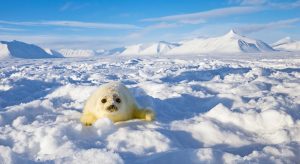
It was a busy night for Richard in that there was once again a very high quality set of prints and Projected Digital Images (PDIs).  He began with the prints where, of the 38 entries, seven of them gained the maximum score of 20 points.  The very first print to be judged was a Bearded Seal pup in its cold and desolate environment.  It painted a bleak picture for this pup, the image of which was captured by Simon Roberts;

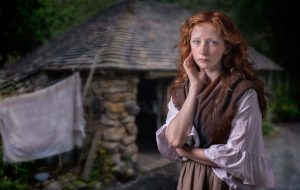
Alan Walker was next with a realistic 1950s style image of a young lady before a background of washing on a line entitled Wash Day, judged best creative image;

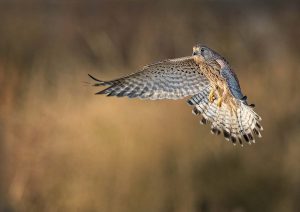
Pete Whieldon caught in fine detail a flying Kestrel in evening light, its wings in the perfect position for maximum photogenic quality;

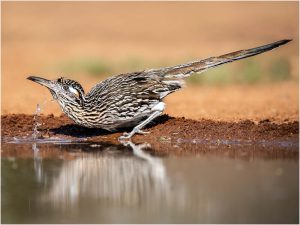
Ronnie Gilbert with one of his famous wildlife images, this time of a perfectly framed Thirsty Roadrunner (over all Best Print of the competition);

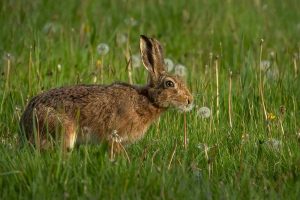
Carol Minx with a beautiful portrait of a hare eating a dandelion clock (best Nature);

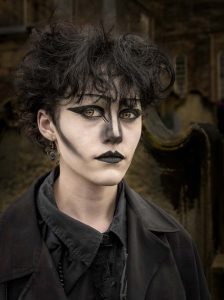
David Price with a perfectly positioned portrait of a well decorated female Goth at Whitby also judged best people image;

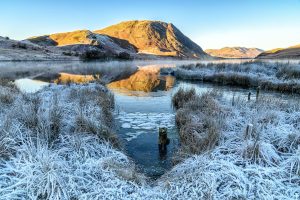
and a landscape by Fred Bell capturing a wintry scene looking towards Melbreak (Best Landscape).

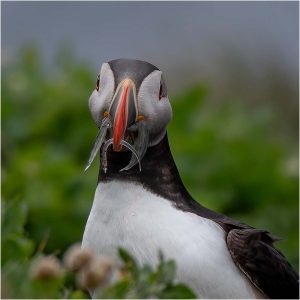
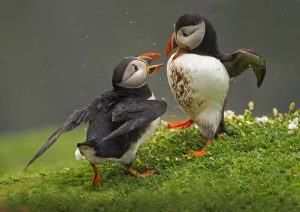
After the tea and Marilyn’s home baked cake, Richard assessed and scored the 58 PDIs.  Once again there were seven images scoring the maximum 20 points.  Pete Whieldon scored his second of the night with a pin sharp image of a pair of courting Puffins;

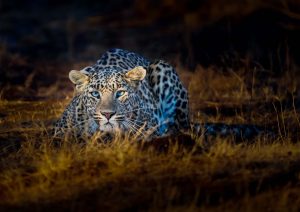
Simon Roberts gained his second maximum score with an image called ‘Cat’s Eyes’.  It was a Jaguar, apparently poised to strike and definitely too close to the camera for comfort!

Bob Given also managed two maximums with sporting images, the first a High Tackle between to powerful female rugby players:

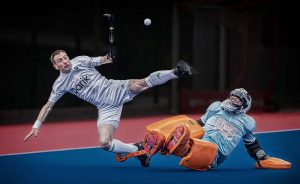
and the second, a ferocious tackle in a men’s Hockey match between Goalie and an unfortunate attacker. The image was titled, ‘Taken Out!’ and was judged the best PDI.


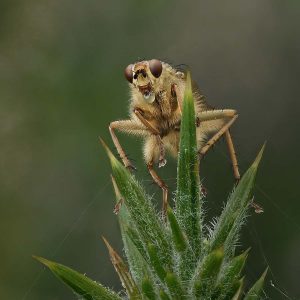
Jo Knight scored a maximum with a fine macro shot of a Dung Fly.  She had overcome the difficulty of a short depth of field in such photography and the insect was pin sharp throughout.

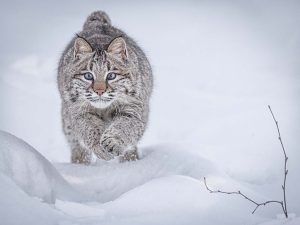
Alan Walker’s second 20 was of a Bobcat chasing prey under the snow.  Running towards the camera, Alan captured the intensity in fine detail of this beautiful animal.

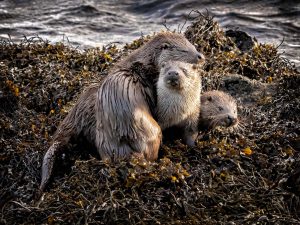
Julie Walker was not to be outdone in the wildlife selection and produced a wonderful picture of a wild Otter family intertwined, from her visit to the Shetlands.

All the entered images can be viewed on our gallery pages:                                2023-2024 Competitions


“Photographic Projects”, Stuart Edgar, October 18th, 2023

This week Keswick Photographic Society was treated to a fascinating presentation by a local amateur photographer and member of the Penrith and District Camera Club, Stuart Edgar CPAGB PPSA EFIAP LBPPA.  Clearly, Stuart is a man with a low boredom threshold and a very creative mind which he exercised to a very productive extent during lockdown. His presentation was to describe in quite some detail, nine different photographic techniques, from each of which he produced unusual, colourful and really intriguing images.  His aim was to create pleasing images without it costing the earth and so Stuart set about describing the various set-ups using everyday household items.  On occasions he raided the pantry and set up arrangements on baked beans or soup cans!

His first project involved creating large bubbles and he did this by adding glycerine to soapy water.  This enabled macro flash photography of the charming oily and colourful surface of bubbles.

The next project was just as effective but rather less glamourous as he collected crushed cans that had been discarded and created, and by careful colour separation and colour matching, produced tryptic images. The third process was very much a photoshop technique where images are completely distorted, duplicated, flipped and stretched to create fantasy twirls of bold colours.  Once again the final product was impressive.

The fourth project involved macro photography of water droplets on minute objects.  Here Stuart demonstrated the process on a dandelion seed clock, amongst other objects.

The next, was a simple process of setting up a number of different shaped glasses and filling them with varying amounts of clear water.  He then placed them in front of colourful patterned card.  The results showed the light refraction and the interesting images that, with practice over a number of different backgrounds, could be produced.

He managed to escape too much trouble from his wife when he filled a number of containers with water and froze them in the kitchen freezer.  Incrementally adding water and a flower to each container to the extent that some florets were totally submerged whilst others remained partially above the water, Stuart photographed each and to some applied layers of texture in photoshop and others were more simply captured.

The seventh and most technical of all the processes involved the capturing of images of water droplets colliding with the splash of an earlier water droplet.  Too complicated to explain here, suffice it to say that beautiful images are thus created.  The eighth and ninth processes were very much simpler and involved either multiple exposures of an image taken from lots of different angles or the effect of oil on water.

What a busy bloke he had been during lockdown and how creative! Stuart was thanked  for what had been a fascinating and inspirational presentation.

David Woodthorpe

“Creative Photography in Camera” with Keith Snell, October 4th, 2023

Our speaker at the latest meeting of Keswick Photographic Society did not have far to travel, nor did he require much introduction. Dr Keith Snell LRPS MPSA EFIAP is a longstanding member and a past Chairman of the club. His topic was ‘In-Camera Creative Photography’, specifically the techniques of intentional camera movement (known as ICM) and multiple exposure photography. As Keith pointed out, both of these techniques are possible to simulate with computer software such as Photoshop, but his preference was to achieve the effects in the field and using the settings available in the camera. He felt that this was a more intimately engaging experience as he could modify the camera settings in response to the landscape environment and conditions at the time of taking the images. The intention in his talk was very much a ‘how to’ description of techniques, together with examples of the kind of effects that could be created by their application.
 

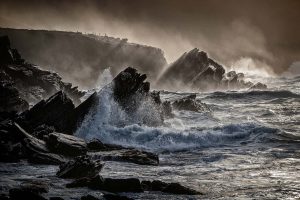
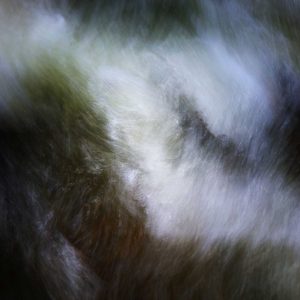
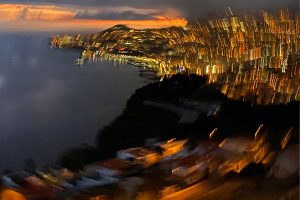
In the first half Keith discussed intentional camera movement which requires that the camera settings should be adjusted to achieve a slow shutter speed, anywhere between 1/10 second and many seconds. While the shutter is open, various movements of the camera by the photographer will blur certain areas of the image, often producing an impressionistic effect or even an abstract image where patterns would predominate over representation of the subject. He emphasised that there were no rigid rules but he described a range of movements and illustrated in his images the effects that they produced. A striking image of the night-time lights of Funchal in Madeira was produced by rotating the camera around a fixed point and a circular movement, which tracked the tumbling waves of a stormy sea at Maryport, invoked something of William Turner’s impressionist painting style.

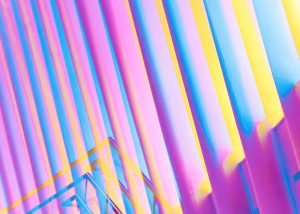
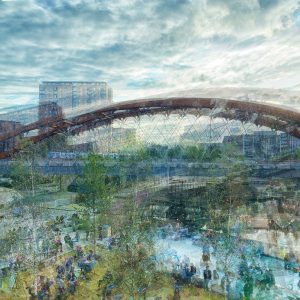
After the break, Keith moved on to the multiple exposure technique where each image is superimposed upon the preceding one; in the time of film cameras this often happened when inadvertently forgetting to wind the film on between exposures! With digital cameras it can be achieved in a controlled way, visualising the emerging composition in the viewfinder or on the back screen of the camera. Between exposures it is possible to change some of the camera settings and Keith described the effect of using different modes of blending of the exposures on the final image. He also showed the striking effects of changing the white balance setting in the camera between exposures. Most photographers use the camera’s automatic white balance setting which adjusts the colour cast to compensate for the different ambient colour temperature of a sunny scene or a cloudy scene for example. But one can set the colour temperature manually and create unnatural colour casts on the separate exposures which, when blended, produce striking abstract images. One of Keith’s examples was the interior of the Oculus building at Ground Zero in New York.

Keith also described the effects achievable by keeping a subject in close register during a series of exposures, producing an impressionist style of image. The other approach is to ‘sample’ different elements of a scene, or even different scenes, in separate exposures and blend these together. After showing many examples of the variety of final effects one can achieve with multi-exposure photography, he finished his presentation by describing what is possible with mobile phone cameras and showed an example of a multiple exposure scene at the Manchester International Festival this summer taken with his iPhone.

Altogether, this was an intriguing talk exploring some creative approaches to photography which were new to many of the members. With Keith’s revelations of the techniques needed, it is possible that many members will be tempted into the ‘dark arts’ of trying them out. They were certainly inspired by the variety of images on display and showed their appreciation for a thought-provoking talk with enthusiastic applauses.

There is an opportunity to view the photographs of our members at our Annual Photographic Exhibition at Keswick’s Theatre by the Lake from 12 October to 11 November.

Kathryn Scorah, “Ever Changing Perspectives”, September 27th, 2023

On 27th September Keswick Photographic Society were pleased to welcome as their guest speaker, Kathryn Scorah MPAGB EFIAP FBPE, who had driven up from her home near Southport to deliver her talk ‘Ever Changing Perspectives’. Although it was a projected image presentation, we were delighted to see that Kathryn had also brought along print versions of her images which revealed the full quality of her work, including a striking print of tree trunks where the textures seemed convincingly three-dimensional. Many of the members had to touch it to convince themselves that it wasn’t printed on textured art paper!

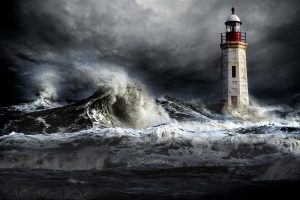
Kathryn explained that the primary motivation in her photography is an emphasis on depicting mood or relating a story to engage the viewer. In order to take her images to the next level from the moment of capture, Kathryn makes extensive use of post-processing manipulation in the computer. This could selectively enhance areas of contrast or brightness in the image to focus the viewer’s attention and evoke an emotional response. An isolated boat adrift in a calm sea or a stormy wave bearing down on a lighthouse were both images which benefitted from this treatment. And she showed many before-and-after examples of how her post-processing skills could transform an initially mundane image into one with striking emotional impact.

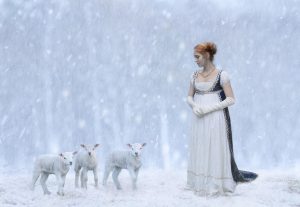
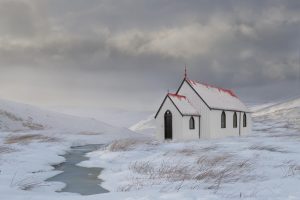
Many of her photographs were composite images in which she seamlessly combined elements from separate images to produce a newly-created picture which conveyed a scene born out of her own imagination. Again, the goal being to tell a story or create a mood for the viewer to engage with. A beautiful girl with her lambs in a snowy winter scene and an isolated church next to a stream out on the mountain side were examples of her imagination at work to produce creative images with impact.

In finding appropriate people to populate some of her composite compositions, Kathryn travels widely to photograph the actors at the Edinburgh Fringe street shows, the Goths who appear every year at Whitby Abbey, the World War veterans at Pickering or the peripatetic Ragged Victorians. There is much skill in evidence in ensuring that wherever these subjects might then appear in her composite photographs, all elements of the scene are carefully and convincingly  combined with due consideration to matching their tones and colours.

Members were in awe of the skill and imagination which Kathryn brought to her creative photography and registered their approval with enthusiastic applause at the end.

Keith Snell