4th Open Competition, Feb 28th 2024

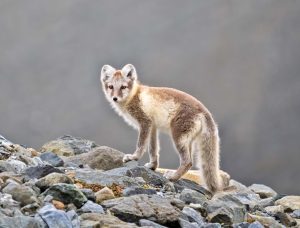
Our 4th Open Compettion was judged by Simon Allen from Dumfries. There were 37 print entries and 56 PDI entries.  In the print section the best print and best nature image of the night was “Autumn Arctic Fox” by Simon Roberts:
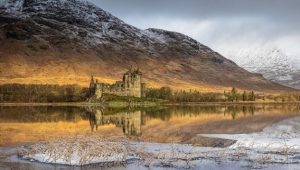
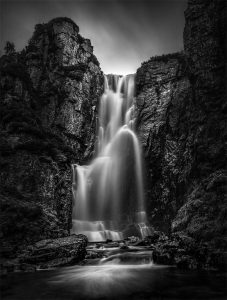
Best landscape of the night was “Wailing Widow” by Ken Rennie:

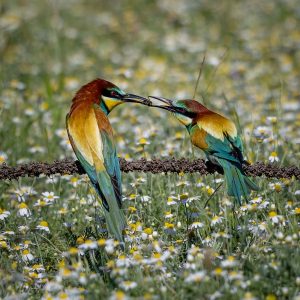
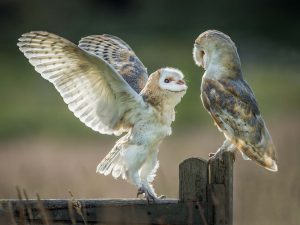
In addition “Give Us A Kiss” by Alan Walker was also awarded 20 marks:

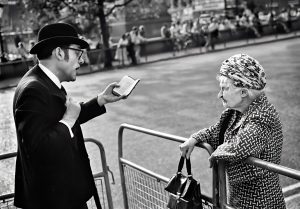
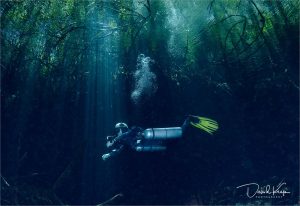
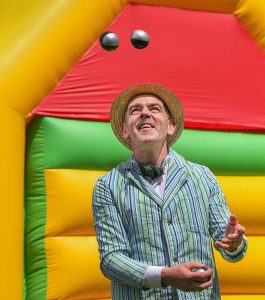
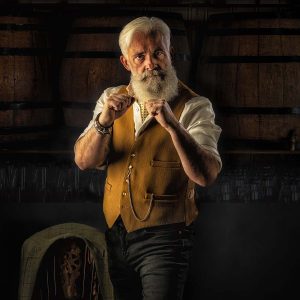
In the PDI section “Beware When the Landlord Takes His Jacket Off” by Alan Walker was the best PDI and best portrait image of the night:

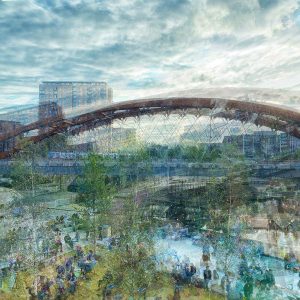
“Impressionist Gathering” by Keith Snell was the best creative image of the night:

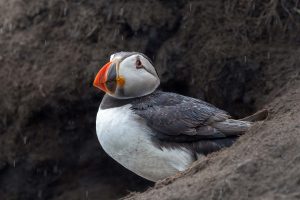
Two other images in the PDI section scored top marks of 20 points. “Puffin at Nesting Hole” by Tony Marsh:

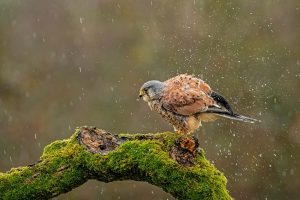
and “Wild Kestrel on a Very Windy Day” by Pete Whieldon:

All the entered images can be viewed on our gallery pages:

2023_2024 Competitions


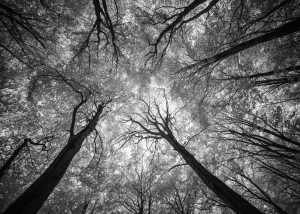
“Looking Up”, February 2024

The topic for our second set subject competition of the season was chosen and judged by our member, Alan Walker. There are two main advantages of having Alan as a judge. We benefit from his years of expertise in the critique of our images and secondly it gives the rest of us a chance of winning something!!

“Looking Up” proved a popular topic with 59 entries from 21 members. In the spirit of the forthcoming Olympics Alan awarded each image Gold, Silver or Bronze. At the end of the evening he then gave his his “best of golds”.

The Best Image of the Night was “Friston Forest IR” by Ade Gidney

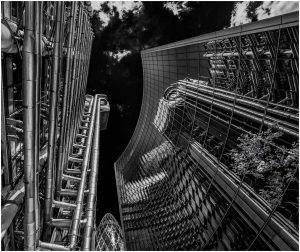
Best ‘Scape was the cityscape “Lloyds Building” by Richard Jakobson

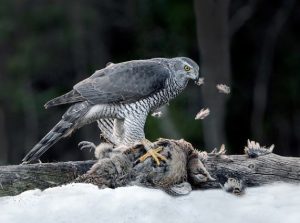
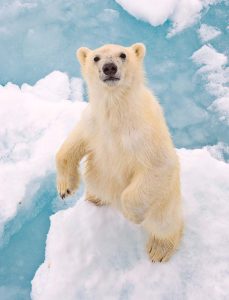
Best Nature was “Looking Up 2” by Simon Roberts

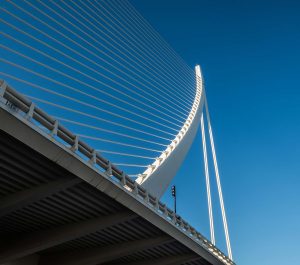
Best Architecture was “StopLight, Valencia” by Annie Given

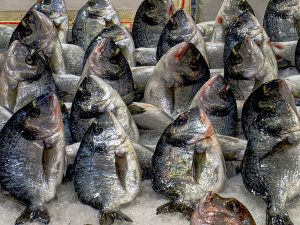
Best Abstract was “Le Pesche” by Philip Cartwright

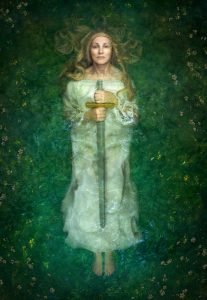
Best Creative was “Lady of the Lake” by Jo Knight

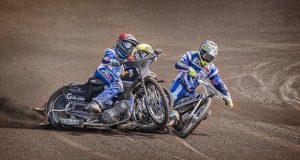
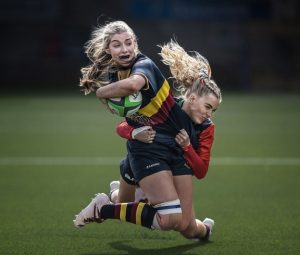
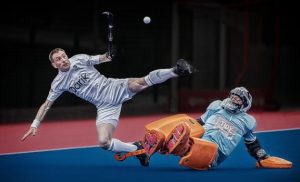
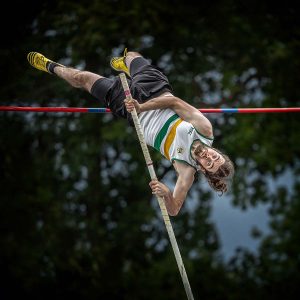
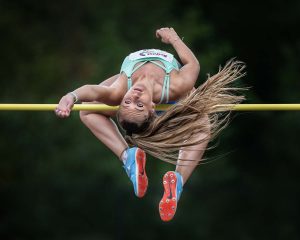
Best Sport was “Over Easy” by Annie Given

Best Portrait was “Looking Up” by Bob Given

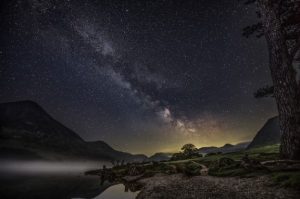
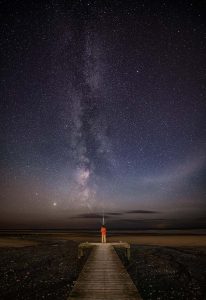
Best Astro was “Seascale Beach” by Richard Jakobson

Best Street was “A Ball in the Hand” by David Woodthorpe

Best “Ahhh shot” was “All that Glitters” by Jo Knight

All the entered images can be seen in our gallery section:

2023-2024 Competition Images


NCPF Club Championships for PDI’s and Prints

The club were very successful in this year’s Northern Counties Photographic Federation Club Championships. We won the print competition with Saltburn coming second and Gosforth third. Bob Given was voted Best Print for “Anna Clears”:

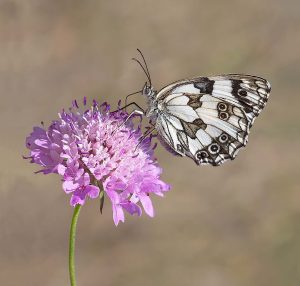
Tricia Rayment’s print “Marbled White on Scabious” was also awarded maximum marks:

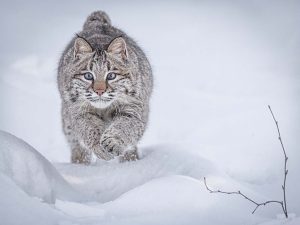
In the PDI competition we tied with Gosforth. The result was eventually decided following a 10 time iteration of their tie-breaker process………and we came second! However Alan Walker’s “Bobcat Hunting Prey” was voted Best PDI:

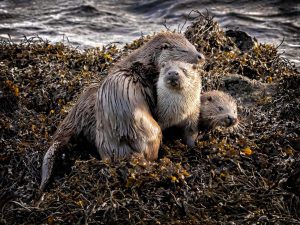
and Julie Walker scored maximum marks for “Otter Family in Shetland”:

A remarkable result for our small club

Morag Paterson and Ted Leeming, January 31st 2024

The latest meeting of Keswick Photographic Society was a first for the club in that the speakers Morag Paterson and Ted Leeming were presenting by zoom from northern Italy’s Liguria region. They treated us to their uniquely creative approaches to landscape photography where they focus on engagement with the environment rather than simply recording views. They are passionate about pursuing a low carbon profile to the extent that in 2016 they abandoned their successful business leading overseas photographic workshops which involved air travel. They embarked on their first low impact photography project in 2009 with a “zero footprint” study of the landscape – viewed from a single point on the patio of their eco-house overlooking the Galloway hills in Scotland. It was remarkable what a variety of emotive images they produced, including panoramic and intimate perspectives as well as more abstract creative interpretations. The 5-year timeline of the initial project also revealed how the landscape can change dramatically over time and resulted in a book of the images.

Ted described two trans-European expeditions he undertook, where he used photographs to connect with the environment in both geographical and anthropological terms. In northern Italy he came across many post-war abandoned houses where families had departed suddenly leaving behind belongings and other evidence of their lives. On other trips he cycled from ex-Soviet era countries, with housing and infrastructure still redolent of those times, to highly industrialised and modern Westernised countries. His photographs evoked a striking social documentary of life in Europe. He then took us on a much more local adventure into their garden in Scotland where he adopted the persona of an ant at soil level, producing often quite abstract images.

Morag then introduced us to some alternative imaging processes, including solargraphs where the photographic paper is sealed inside a tin can with a single pinhole in its side and then left outside for months before developing and printing the result. Other imaging techniques included cyanotypes, anthotypes and chromatography of tree and plant extracts. A striking blue cyanotype of the hydrology of the waterways in their local area showed how hydroelectric development has impacted the local landscape. It is now on permanent display in Galloway.

Ted finished the evening with a description of their recent residency exploring the diminishing habitat of the migratory nightjar in a lowlands peatbog area southwest of Dumfries. The resulting exhibition in Dumfries in November 2023 featured photographic interpretations and alternative imaging processes and installations. This project truly encapsulated the passionate engagement that Ted and Morag have with the environment and how they employ their photographic activity and skill to that end.

Members were intrigued and amazed by the imaginative approaches which our speakers brought to their photography and registered their approval with enthusiastic applause.

Keith Snell

Composition in Photoshop by Jo Knight, Jan 24th 2024

Jo Knight is one of Keswick’s most creative members. Her images have won many prestigious awards including Honourable Mentions in 2021, 2022 and 2023 in the International Photography Awards. This is a competition that recognises photography’s leading talents. It attracts thousands of entries from over 120 countries around the world.

Tonight, Jo gave a master class in how to combine images to create a composite using a variety of tools available in Photoshop. This is a software programme designed for both photographers and graphic artists. Jo used her image “Broken but Free” to demonstrate the various techniques she employs to put together a composite. To create this particular image, she photographed herself dressed, and made up, as a doll. She said that she had used U Tube to research her makeup. Jo uses a small bedroom in her cottage as a studio for taking photos and she photographed herself against a purpose made backdrop.

Jo explained that her first step was to put together a background. Her starting point was a blank canvas created in Photoshop to which she added the backdrop that she had photographed herself against, an image of floorboards and lastly an image of a skirting board. Once the background was completed to her satisfaction, she added the image of herself. After this she added legs, feet, arms and hands from a photograph of a small artist’s mannequin. She then added a hand with string attached to the fingers and made it appear that it was emerging from the wall behind her. The final touch was to add strings that appeared to have been attached to her body but then cut.

At every stage Jo detailed the processes she undertook, and the adjustments she made to make the various component images fit together and look natural. This was a time-consuming exercise requiring a significant amount of work and expertise. Her well-deserved success has obviously been the result of her meticulous attention to detail as well as her enormously creative approach to photography. She explained that she can spend weeks thinking about the composition of an image and the story that she wants it to tell. Throughout her talk Jo gave useful tips about how to make the most of Photoshop and how to make composites work. Both those just starting to use Photoshop and those with more experience found this a useful and interesting talk. Jo’s style of presentation is very clear and easy to understand and this was an excellent evening.

If you would like to find out more about Jo and her work her website address is

Jo Knight is one of Keswick’s most creative members. Her images have won many prestigious awards including Honourable Mentions in 2021, 2022 and 2023 in the International Photography Awards. This is a competition that recognises photography’s leading talents. It attracts thousands of entries from over 120 countries around the world.

Tonight, Jo gave a master class in how to combine images to create a composite using a variety of tools available in Photoshop. This is a software programme designed for both photographers and graphic artists. Jo used her image “Broken but Free” to demonstrate the various techniques she employs to put together a composite. To create this particular image, she photographed herself dressed, and made up, as a doll. She said that she had used U Tube to research her makeup. Jo uses a small bedroom in her cottage as a studio for taking photos and she photographed herself against a purpose made backdrop.

Jo explained that her first step was to put together a background. Her starting point was a blank canvas created in Photoshop to which she added the backdrop that she had photographed herself against, an image of floorboards and lastly an image of a skirting board. Once the background was completed to her satisfaction, she added the image of herself. After this she added legs, feet, arms and hands from a photograph of a small artist’s mannequin. She then added a hand with string attached to the fingers and made it appear that it was emerging from the wall behind her. The final touch was to add strings that appeared to have been attached to her body but then cut.

At every stage Jo detailed the processes she undertook, and the adjustments she made to make the various component images fit together and look natural. This was a time-consuming exercise requiring a significant amount of work and expertise. Her well-deserved success has obviously been the result of her meticulous attention to detail as well as her enormously creative approach to photography. She explained that she can spend weeks thinking about the composition of an image and the story that she wants it to tell. Throughout her talk Jo gave useful tips about how to make the most of Photoshop and how to make composites work. Both those just starting to use Photoshop and those with more experience found this a useful and interesting talk. Jo’s style of presentation is very clear and easy to understand and this was an excellent evening. If you would like to find out more about Jo and her work her website address is:

https://BAMimages.net.

Julie Walker

.

Amy Bateman, “Forty Farms”, Jan 17th 2024

On January 17th Keswick Photographic Society heard an excellent presentation from farmer, mother and professional photographer Amy Bateman, author of the extremely well received book: “Forty Farms”. This, Lakeland Book of the Year, contains descriptions of forty widely disparate farms across the breadth of Cumbria, with interviews with the farmers concerned and illustrated with Amy’s excellent photographs.

What was a dauntingly large task in itself to complete, has continued as Amy travels around giving talks and presentations as a follow up and all of which provides an essential supplement to the income her family receives from their own farming enterprise.

The bulk of her talk consisted of short descriptions of over half of the farms featured in her book with anecdotes about her visits, including meeting intractable bulls, an Ostrich(!), and a donkey that lived with a herd of bulls and kept them under total control. (She was advised not to worry about the bulls, they were all subservient and docile, but not to approach the donkey!). Many of the farms were introducing conservation measures to both increase the natural biodiversity and regenerate the soil but she included a large highly genetically driven cow breeding operation, a sheep-milking business that made its own wonderful cheese, an egg-producer that combined very natural woodland based free-range living with high tech egg checking and packing facilities, and even the farm attached to the three Michelin star, L’Enclume, in Cartmel, which produces all of the restaurant’s vegetables and herbs and where Amy tried her hand at flying her photography drone through the poly tunnels, with not totally successful results.

Amy has won a number of photographic awards, none more prestigious than being the winner of British Photographer of the Year with an atmospheric self portrait of her hand feeding a newborn lamb in the middle of the night.

She also delivers workshops to other photographers teaching them about techniques to record farming life and giving them privileged access to parts of farms normally out of bounds.

The audience that had dared to come out into the sub-zero temperatures were thoroughly entertained, educated and inspired in equal measure and could only agree with the quote that Amy put up at the end of her talk from the great photographer Don McCullin, “Photography for me is not looking, it’s feeling. If you can’t feel what you’re looking at, then you’re never going to get others to feel anything when they look at your pictures.” Amy had evidently succeeded in this aspiration.

3rd Open Competition, January 2024

Our 3rd Open Competition was judged by Arjun Nambiar who travelled from Newcastle for us.  The results in the various categories were:

Best Nature PDI and Best Overall PDI; “Are you ready to fly yet son” by Alan Walker

Best People PDI; “The Matriarch” by Jo Knight

Best Creative PDI: “Pleiades Open Star Cluster” by David Rayment

Best Landscape PDI: “The Early Morning Photographer” by Fred Bell

Best People Print: “A Classic Pose” by Julie Walker

Best Nature Print and Best Overall Print: “Hawksbill Rising” by David Carine

Best Creative Print: “Lakeland Dawn” by Ken Rennie

Best Landscape Print: “Seilebost Grasses” by David Carine

All of the entered images can be viewed on our gallery pages:

2023-2024 Open Competitions


“Living th African Dream” with Alison Mees. 3rd January, 2024

A great start to the society’s 2024 programme with a talk from Alison Mees titled “Living the African Dream”. Alison in a Brit who lived in East Africa for more than 16 years, working in various roles in tourism in Zambia, Tanzania and most recently Kenya’s North Mara Conservancy.

She qualified there as a safari driving guide before the covid pandemic led to her return to the UK where she now uses her wealth of experience to organise and lead small-group wildlife and photography trips back to Amboseli & Ol Pejeta.

As well as her own back-story of a life-long passion for Africa, even marrying in the bush, she was able to tell us some of the life stories behind many of the animals followed down the generations in her images – something only possible after spending time with them over many seasons and years rather than the few days allowed even to those of us lucky enough to visit on holiday.

Apart from her wonderful wildlife photographs, Alison described & showed some of what she has been able to put back, both into local Masai and other community projects and into conservation and research, even now contributing remotely, as a volunteer with the Cheetah Conservation Fund UK.

After the next regular meeting on 10th January, an open competition for members to be judged by Arjun Nambiar LRPS, we have a special event which will be of interest to many non-photographers at 7.30pm on Wednesday 17th January, held at the larger Crosthwaite Parish Rooms in Keswick. Amy Bateman is a local freelance photographer and author of the book “Forty Farms” which explores changes in the working landscape of Cumbria with evocative images capturing life in the land today. Her hugely successful large format exhibition of prints at Rheged last year is now on tour. Guests are welcome at this meeting at a charge of £5 on the door.

Simon Roberts

Astrophotography, 29th November, Richard Jakobson

Tonight we enjoyed a fascinating talk on Astrophotography given by one of our long-standing members, Richard Jakobson. His talk was divided into two halves, in the first he concentrated on the Milky Way describing it as a pizza with a large egg in its centre. Richard goes to great lengths to achieve his shots, camping out all night in some cases. The effort he puts in was more than evident in the many superb images he used to illustrate his talk. Most of these were taken in the Lake District. Castlerigg, Crummock Water, Wast Water and Buttermere being some of his favourite locations.

Images were shown from further afield too, including Stonehenge in Wiltshire, Portugal and Deadvlei in Namibia.

Richard explained that, although he has been taking images of the Milky Way for some years, the occasions on which he can pursue this interest are limited. The weather conditions have to be perfect with clear skies, the moon has to be in the right phase and the Milky Way has to be in a good position. Here in the North its location is best in the spring. Whatever the time of year though you need to be adequately prepared for the cold with warm clothes, hat and gloves. Richard emphasised this necessity with an image of ice that had formed on his rucksack while he was taking photographs.

He recommended surveying potential locations during daylight hours, not only to identify good compositions but also to be aware of hazards such as rocks, rabbit holes and barbed wire. In Namibia there was also the possibility of encountering wild animals including lions. Fortunately, his only encounter had been with a Bat Eared Fox.

Richard also showed some images of the moon and the Aurora Borealis and gave some tips on photographing these too.

The second half of Richard’s talk was dedicated to Deep Sky Astrophotography. This requires rather more specialist equipment than for photographing the Milky Way. The resulting images of a number of nebulas taken by Richard were however spectacular.

Surprisingly, despite their huge distance from the Earth, because they are so enormous some can even be seen through binoculars.

He explained that this type of photography is not for everyone. Considerable patience is required as 30 to 40 images are needed to build up a picture, each exposure taking 4 to 5 minutes. A fondness for spending hours in front of a computer screen processing the images is also helpful.

Julie Walker

“Africa’s  Savannah, Desert and Bush” with Alan Walker, November 22nd, 2023

Alan Walker, our speaker this week, is a long-standing member of Keswick Photographic Society who needed no introduction. He has many photographic interests but he is probably most passionate about wildlife and has travelled far and wide in pursuit of his favourite species. Tonight, he concentrated on Africa and his entertaining and informative talk, titled  “Africa’s  Savannah, Desert and Bush”,  included images from Namibia, Botswana, South Africa and Kenya.

He started his talk in the Namib Desert in Namibia and moved swiftly to the Kalahari Desert which spans three countries. Alan emphasised the quality of light and his love of the yellow grasses in the Kgalagadi Transfrontier Park in South Africa. His images included some of the smaller animals such as mongoose and meerkats:

although to his disappointment none were wearing stripy pyjamas or smoking jackets!  Of course, many of the larger animals were also pictured including several species of antelope, gemsbok, lions, cheetahs and desert elephants.

Cheetahs are amongst Alan’s favourite animals. On a trip to the Masai Mara in Kenya in October this year Alan had encountered two females, one with three cubs which were only a couple of months old and a second with two slightly older cubs.

These were very rare and precious sightings. Cheetahs are an endangered species and Alan described how vulnerable they are, although feisty which was demonstrated by even the youngest cubs challenging the jackals that frequently followed them around.

Lions and hyenas however present the greatest danger and Alan described a confrontation between lions and one of the cheetah families during which the local rangers, together with the several guides that were present, successfully protected the cheetahs by manoeuvring their vehicles to create a barrier between the two species.

There were also numerous images of lions and their cubs which Alan said provided entertainment for hours with their antics. Leopards were also included, together with elephants, baboons and many species of antelope.

The final section of Alan’s talk focused on the bush of the Kruger National Park in South Africa where it was more difficult to see and follow the animals. He included a story about a pair of mating lions who he’d been able to follow because of his driver’s ability to reverse for several miles along a rough track.

He also talked about the white rhinos that are protected by rangers from the poachers who cross the border from Mozambique. Indeed this is a highly dangerous occupation. Alan concluded his talk with a selection of images of birds.

Julie Walker

Editors addendum: It is important to note that although Alan presented this wonderful collection of wildlife images and Julie wrote the above article, she omitted to mention that the presentation  was a collection of both Alan’s and her own images.