“Photographing Cumbria”: Jonny Gios, Feb11th 2026

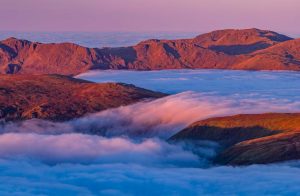
Keswick Photographic Society can’t have ever had a more wide-ranging talk than this week’s from Jonny Gios who is a Jack of all trades and master of most.

He covered virtually the whole gamut of contemporary Cumbrian photography – primarily landscape, but showing people and places, wildlife, aviation, sport and photojournalism along with some drone photography and comments on videography.

Continue reading ““Photographing Cumbria”: Jonny Gios, Feb11th 2026″

Set Subject Competition: Sports & Photojournalism, Feb 4th 2026

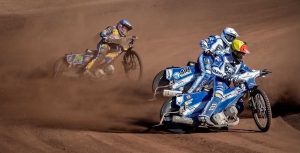
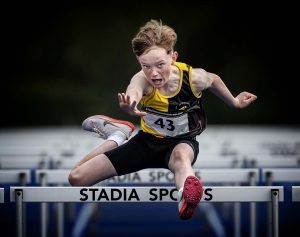
Last week’s meeting of Keswick Photographic Society consisted of a friendly assessment of members own photographs which fitted the set subjects of Sports Photography or Photo-journalism. Our judge was fellow member, Bob Givens, a highly experienced sports photographer. The evening started with a wide variety of sports being featured; from lacrosse to fell-running, foot volleyball to rugby, high jumping to speedway, Cumbrian wrestling to football. The standard of the images was high and singled out for particular praise were David Woodthorpe’s speedway shot, “To Stay Clean Stay Ahead”:

Continue reading “Set Subject Competition: Sports & Photojournalism, Feb 4th 2026”

“Imaging Reality: Documentary and Street Photography”, Tom Peck, January 28th 2026

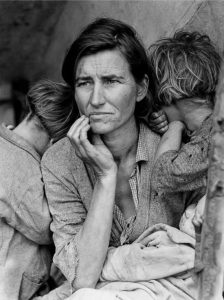
Tom Peck spoke to us via zoom from his home on the history and development of Documentary Photography along with the related themes of War Photography, Street Photography and the Depiction of Englishness. He began by outlining the historical development of the subject, with reference to the iconic 1936 image of Florence Owens Thompson by Dorothea Lange. The title of the photograph is Migrant Mother and is often referred to as the “Mona Lisa of the 1930s.”

Continue reading ““Imaging Reality: Documentary and Street Photography”, Tom Peck, January 28th 2026”

10 x 10 x 10 Evening, January 21st 2026

One of the society’s favourite evenings is the  10 x 10 x 10 and presented by ten volunteer members of Keswick Photographic Society (or occasionally 10 volunteered members!). They choose ten images and speak about them for no more than ten minutes. This year was no exception with plenty of volunteers coming forward to show some of their favourite images.  There was no set theme and members could choose anything they wished.  Not surprisingly there was a broad range of genres.

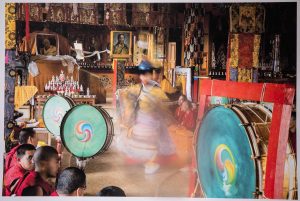
Colin Dixon began by showing images which influenced his interest in photography, from his early days of rock climbing, to some of the prestigious projects he became involved in, photographing historical architecture and sculptures. He concluded his presentation with some modern travel images from India.

Continue reading “10 x 10 x 10 Evening, January 21st 2026”

3rd Open Competition 14th January 2026

Our 3rd open competition was judged by John Gravett from Workington Camera Club. He has worked professionally in several genres of photography throughout his career and was able to give a studied, expert critique of our images.  Winners in the various classes were:

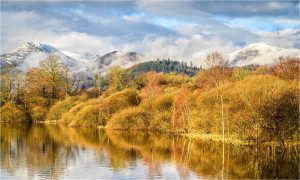
Best Print Landscape: Fred Bell, Lakeland Scene:

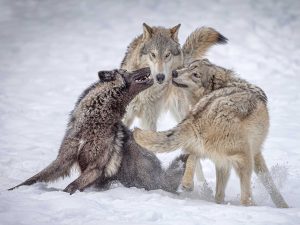
Best Print Natue and overall best Print: Alan Walker, Leader of the pack:

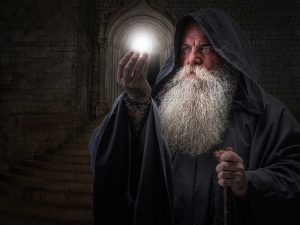
Best Print Portrait: Alan Walker, Looking into the Future:

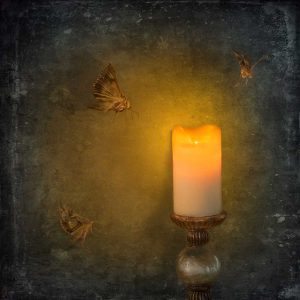
Best PDI Creative: Jo Knight, Moths to a Flame:

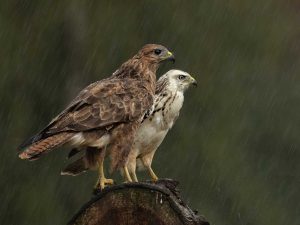
Best PDI Nature and overall best PDI: Julie Walker, Rare White Buzzard and Parent in Rain:

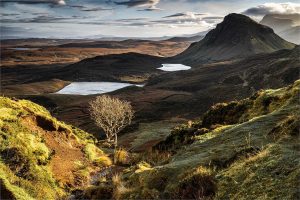
Best PDI Landscape: Fred Bell, View from Quiraing:

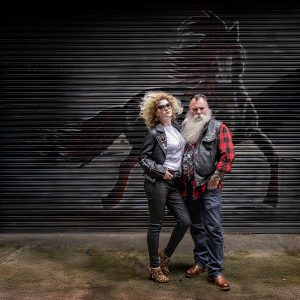
Best PDI People: Annie Given, Riders:

Richard Jakobson

All the entered images can viewed on our gallery pages:

2025-2026 Competition images


Mark Sisson: “Nature of the Falkland Islands”, Jan 7th 2026

For the first meeting of the New Year, members were treated to a tour-de-force of nature photography. The Nature of the Falkland Islands talk was given by professional photographer and tour guide Mark Sisson. Mark has been a professional for over twenty years and confessed that if he could only ever visit one location in the world it would be the Falkland Islands. The richness of the unique wildlife there is protected by low levels of human interference with a sparse population. He has published a book of nature photography of the islands in association with Falklands Conservation, a charity devoted to protecting the diverse ecosystem. There are two main islands in the archipelago and some 700 smaller islands that go to make up this expansive area.

The two most iconic species on these sub-Antarctic islands are the penguins and albatross. Mark showed images of the characteristic black-browed albatross, including the nearly half a million birds on a three mile stretch of Steeple Jason island, the largest colony in the world.
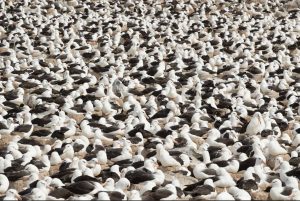
As well as educating us on the habitat and life cycle of these impressive birds, Mark also showed us how best to capture them with a camera and how to choose the best conditions and composition to create photographic impact.

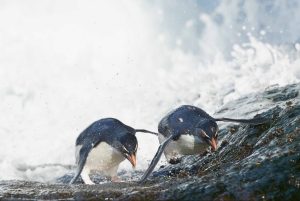
He took the same approach with his images of various species of penguin, emphasising not only eye-level lens contact to engage the viewer but also getting even lower to encompass the landscape in which they live. Among the species he featured were the agile and determined Rockhoppers,
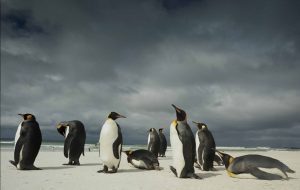
the beautifully-marked King penguins,
the diminutive Magellanic penguins and the speedy-swimming gentoo penguins.
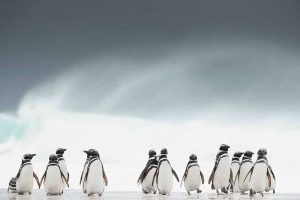
All had their different endearing features, but apparently it was gentoo chicks that scored highest for cuteness!
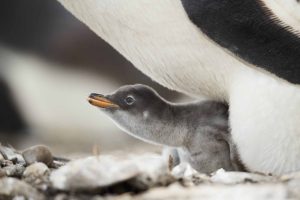
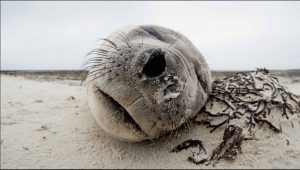
Among the many other birds that Mark illustrated were the predatory skua and crested caracara, the charismatic silvery grebe with piggy-backing chick, the imperial cormorant with its striking blue eye, Magellanic snipe, two-banded plover, the colourful dotterel and kelp geese. Not that mammals escaped Mark’s sensitive and imaginative camera with sealions predating on Magellanic penguins and elephant seals justifying the epithet, although the ‘cuteness’ of the sleeping young elephant seal did very much depend on the beholder’s eye!
Mark’s easy presentation style, encyclopedic knowledge and mind-blowing images ensured that the evening was a pleasure from start to finish and he was rewarded with enthusiastic applause from a captivated audience.

Keith Snell

Western Area Battle

The final event of the year for Keswick Photographic Society was participation in what is known as the Western Area Battle. This takes place annually between Cumbrian clubs that are members of the national Photographic Alliance of Great Britain – Keswick, Carlisle, Dalston, Penrith and Workington and a guest club from Dumfries from over the Solway. It was held at Dalston Victory Hall, organised by Penrith & District Camera Club and judged by Jane Lazenby from Barnsley.

Jane is a member of Wigan photographic society and has a degree in fine art as well as numerous photographic distinctions. She is an experienced judge in both national and international competitions. In her own work she focuses on creative composite photography by combining a number of different photographic images into a single image to create a pictorial story. The afternoon started with her presentation on how she produces her composite images using computer programmes. She was at pains to emphasise that none of this is achieved by using AI.

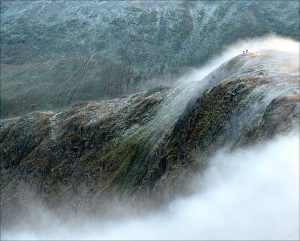
After an interval for refreshments, the judging took place with prints being scored first followed by projected digital images, in both cases with 8 entries from each club. The overall outcomes were that for both prints and digital images, Keswick Photographic Society were the winners and Workington Camera Club was runner up. The top scoring print (with 20 points) was ‘Figures Descending In The Mist’ by John Williams of Penrith & District Camera Club:

The top scoring digital image was ‘In The Lead’ by Bob Given of Keswick Photographic Society.

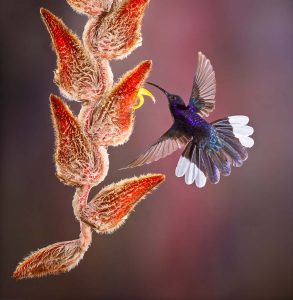
Keswick also had high scoring images in prints: with 19 for ‘Violet Sabrewing’ by Simon Roberts;

and 18 for ‘Breaking Through’ by Bob Given; ‘Supported’ by Tony Melling and ‘Red Fox With Mouse’ by Julie Walker.

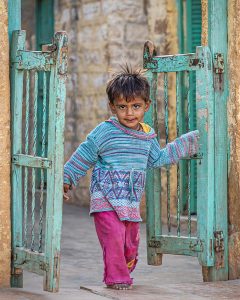
In digital images: 20 for ‘In The Lead’ by Bob Given and 19 for ‘Rajasthani Village Boy’ by David Woodthorpe;

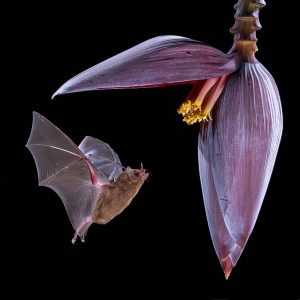
and ‘Nectar Bat’ by Simon Roberts;

and 18 for ‘Sunset Shore’ by Tony Melling.

“A Doll’s House” November 25th 2025

In collaboration with the Keswick Theatre Club, seven of our members attended the dress rehearsal of their production of A Dolls House by Ibsen. We we spaced all around the small seating area in the Studio at the Theatre by the Lake. This gave quite differing viewpoints of the play and the actors. It was interesting to see how we all coped with the difficulties of the lighting and the differing approaches to our final images. The Keswick Theatre Group were able to use some of our images on a stand during their run and Northern Arts used them in their review of the production.

Here is a selection of our images:

Keith Snell:

David Price:

Richard Petty:

Simon Roberts:

Richard Jakobson:

Jo Knight:

Clive Penkett:

A larger selection can be seen on our gallery page:

A Dolls House


“What Makes a Picture Work”: Sue Clark: Nov 19th, 2025

On Wednesday 19th November our guest speaker was Sue Clark who is a long-standing member of Conwy Camera Club. She is also a well-known photographic judge. Sue’s talk on “What Makes a Picture Work” addressed the various elements that are needed for a successful photograph.

She started by describing the core principles of composition used for centuries by artists, and more recently by photographers, such as the rule of thirds, the golden section, the golden spiral and golden triangles. She then covered how elements such as empty space, line and colour can be used to create different effects. Various factors such as balance to create stability, contrast to create interest, emphasis to direct attention to a focal point, movement to guide the viewer’s eye, and pattern to create rhythm, can be employed. In some cases, rules can be broken to shock or challenge the viewer.

Throughout her talk Sue gave numerous illustrations of how these rules had been applied by artists, photographers, graphic designers and even architects.  She demonstrated how a composition could be improved for example by flipping it so as to read it from left to right or by removing distracting elements.  The feeing of a portrait could be changed by taking the photograph from a different angle. Lines can be used effectively, diagonal lines for example can be used to create drama and frames can be used to keep the viewer’s eye in the picture. Using an image of the American Embassy in London and the American flag she illustrated that patterns can be improved by the inclusion of a focal point.

Sue’s talk was a fascinating insight into the principles that many use instinctively in producing an image. In conclusion Sue recommended that Keswick’s members look at a range of images to determine what makes a picture work but added that they should not be constrained by rules.

“A Feeling of Impressionism” with Steve Le Prevost, Nov 12th, 2025

The latest speaker at Keswick Photographic Society was Guernsey based, Steven Le Provost. For many years a powerful force in UK photographic circles, Steven has judged both national and international competitions and has numerous distinctions from organisations such as the Royal Photographic Society and the London Salon of Photography.

He specialises in creating images that have a distinct “painterly” feel, using techniques in Photoshop that take a number of fairly ordinary initial photographs but blends them together in ingenious and creative ways.

Eschewing sharpness in favour of a degree of blurriness with colours “bleeding” into the background he aims to produce an end result which portrays mood, atmosphere and emotion. He showed us images of still life, mostly arrangements of flowers, images of the countryside, often with small figures within them and “made up” scenes on the beach and in cityscapes. He uses “layers” extensively.

These are backgrounds of mundane items such as peeling paint, an old wall, weathered wood or even the frosted glass of his front door, which can be adjusted in opacity on all or parts the image to create atmosphere and interest. Much of this process involves trial and error but in general what was striking is the creative imagination that is involved to envisage an end result that is both artistic and unique to him as a photographer.

It was a shame that this was a zoom talk, so the meeting could not view prints of his work but instead had to imagine how the images we were seeing on the screen would come to life on carefully selected art papers.

Tony Marsh